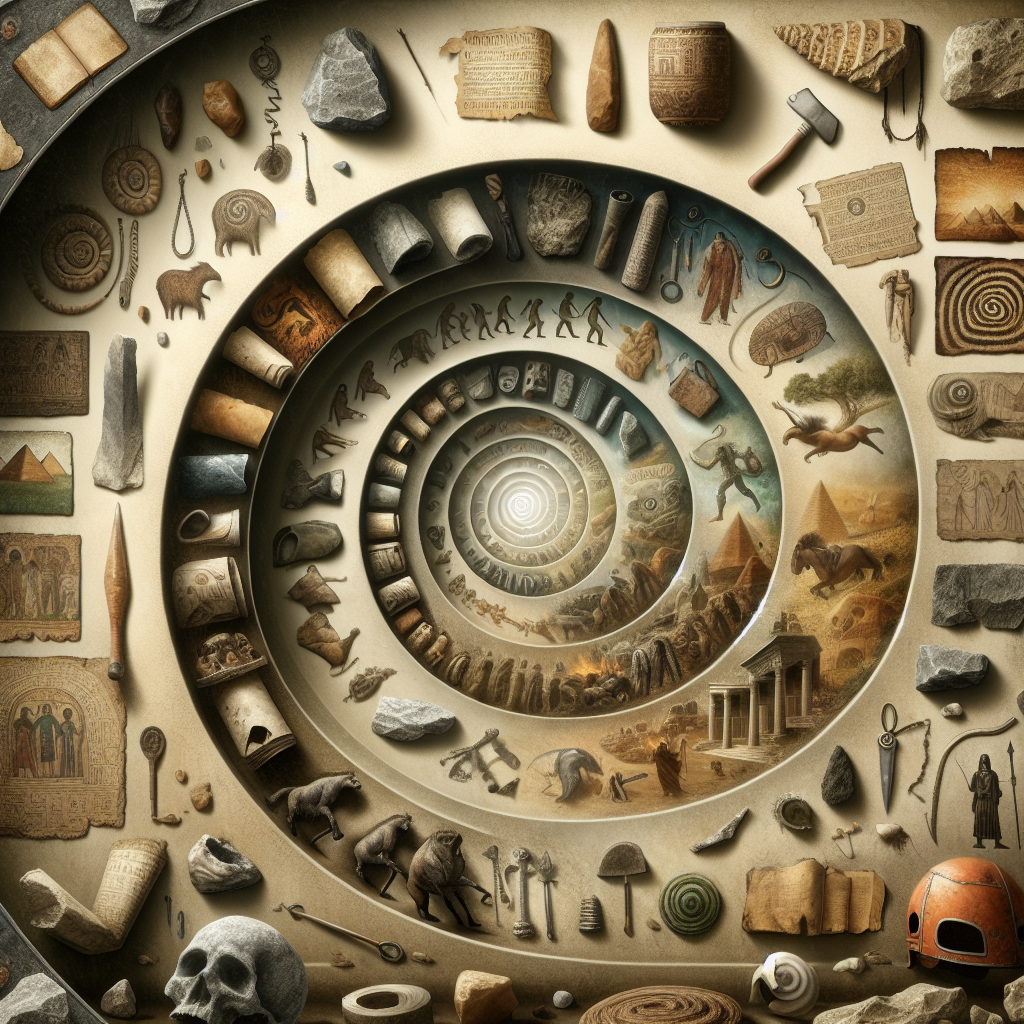
The Dawn of Civilization
The study of ancient history involves exploring the rich tapestries of early human civilization. The term ‘ancient history’ encapsulates the period from the beginning of recorded human history until the Early Middle Ages. This era is characterized by the emergence of complex societies, the invention of written language, and remarkable cultural developments that have shaped modern civilizations.
The Birth of Civilizations
Ancient civilizations emerged in regions where environmental conditions favored agricultural practices. The fertile lands of the Nile, Tigris-Euphrates, Indus, and Yellow River valleys supported the growth of large communities and the development of sophisticated social structures.
- Mesopotamia: Often called the ‘Cradle of Civilization’, Mesopotamia, situated between the Tigris and Euphrates rivers, saw the rise of the Sumerians, Akkadians, Babylonians, and Assyrians. They produced impressive innovations, such as the wheel, cuneiform script, and monumental architecture.
- Ancient Egypt: Centered along the Nile River, ancient Egypt was known for its remarkable advances in art, architecture, and science. The construction of the Pyramids of Giza remains a testament to their engineering prowess.
- Indus Valley Civilization: Flourishing along the Indus River, this civilization is renowned for its advanced urban planning, including sophisticated drainage systems and grid-patterned cities, like Harappa and Mohenjo-daro.
- Ancient China: Early Chinese civilization saw the rise of dynasties such as the Xia, Shang, and Zhou, which contributed significantly to regional intellectual and technological developments, including the invention of the compass and papermaking.
Milestones in Ancient History
The timeline of ancient history is marked by significant events and innovations that shaped the development of human societies. Each of these milestones represents a leap forward in the complexity and capability of ancient peoples.
The Invention of Writing
One of the most impactful advancements of ancient times was the development of writing systems. Writing enabled the recording of history, administration, and literary creativity, which were essential for the management and preservation of complex societies.
The Rise of Empires
Empires emerged as dominant powers capable of uniting diverse peoples and vast territories. The Persian Empire, the Athenian Empire, and the Roman Empire expanded through military conquests and diplomatic strategies, spreading cultural and technological innovations across continents.
Religious and Philosophical Developments
Ancient history witnessed the birth of major world religions and philosophical discourses that still influence contemporary thought and belief systems.
- Hinduism and Buddhism: Originating in the Indian subcontinent, these religions laid the foundation for spiritual and philosophical inquiry, focusing on the nature of existence, the process of rebirth, and the pursuit of enlightenment.
- Confucianism and Taoism: These Chinese philosophies emphasized harmony, order, and balance, guiding governance and personal conduct throughout East Asia.
- Greek Philosophy: Thinkers like Socrates, Plato, and Aristotle explored questions of ethics, politics, and the nature of reality, laying the groundwork for Western intellectual traditions.
Technological and Cultural Legacy
The innovations of ancient civilizations have left an enduring legacy on world culture and technology. From monumental architecture to the principles underlying modern science and governance, the impact of ancient history is profoundly felt today.
Architectural Marvels
The ancient world gifted us with architectural masterpieces such as the Parthenon, the Great Wall of China, and Machu Picchu, each reflecting the artistic and engineering capabilities of their builders.
Scientific Foundations
Ancient mathematicians and scientists pioneered studies in astronomy, geometry, and physics that inform contemporary scientific practices. Innovations like the Antikythera mechanism provide insight into the technological sophistication of ancient societies.