The Role of Motorcycles in Today’s Transport Mix
Motorcycles occupy a unique space in automotive and transport: they are smaller than cars, often cheaper to run, and more agile in dense traffic, yet they can also deliver long-distance comfort and serious cargo capability when set up correctly. In many cities, they reduce congestion and parking demand; in rural areas, they offer dependable mobility where public transport is limited. Beyond practicality, motorcycles remain a cultural icon—part sport machine, part tool, part personal statement.
Understanding motorcycles as a transport category means looking past engine size and styling. The best choice depends on your daily route, skill level, weather realities, and the type of riding you actually plan to do. A motorcycle that feels thrilling for 20 minutes may be exhausting for a 45-minute commute, while a comfortable touring bike may feel bulky in tight urban lanes. The goal is matching the machine to the mission.
Major Motorcycle Categories and What They’re For
Standard and Naked Bikes
Standards and naked bikes typically offer upright ergonomics, moderate power, and minimal bodywork. They’re popular for commuting and general riding because they balance comfort, visibility, and ease of handling. Maintenance access can also be simpler due to fewer fairings.
Sportbikes
Sportbikes prioritize acceleration, high-speed stability, and cornering performance, often using aggressive riding positions and aerodynamic fairings. They can be exhilarating on twisty roads or track days, but wrists, neck, and lower back may pay the price in daily stop-and-go traffic. Insurance rates and tire wear can be higher, reflecting the performance focus.
Touring and Sport-Touring
Touring motorcycles are built for distance: wind protection, luggage capacity, passenger comfort, and long service intervals are key selling points. Sport-tourers try to blend touring comfort with more responsive handling. If you plan to ride highways frequently or take multi-day trips, these categories can reduce fatigue dramatically.
Adventure (ADV) Bikes
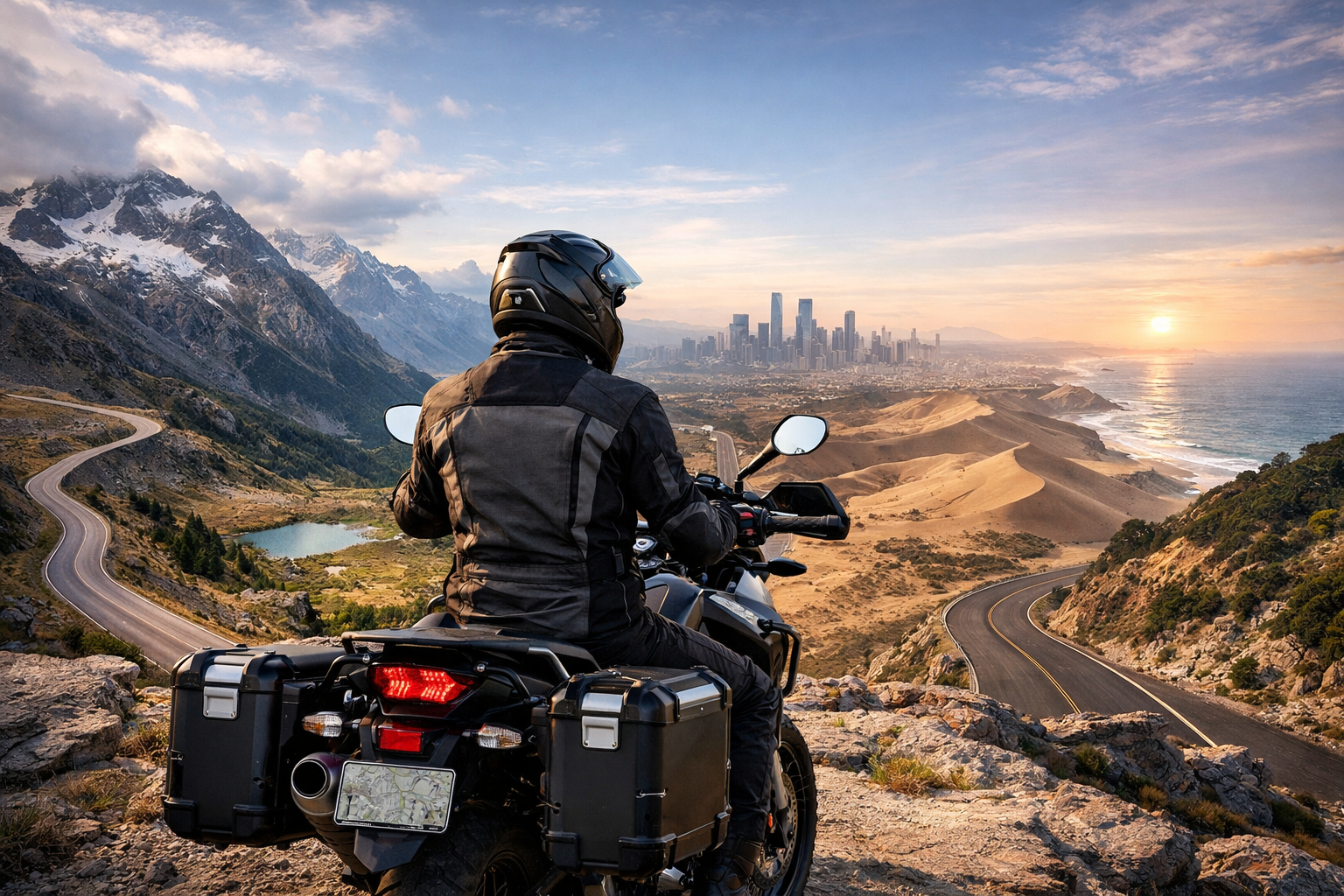
Adventure bikes are designed to handle mixed surfaces—pavement, gravel, and light off-road—while still offering long-range comfort. Taller suspension and upright ergonomics improve visibility and pothole absorption, though seat height can challenge shorter riders. Many owners use ADVs primarily on-road because of their versatility and luggage options.
Cruisers
Cruisers emphasize relaxed posture, low seat heights, and torque-rich engines. They are often comfortable at moderate speeds and friendly for new riders due to stable geometry, but ground clearance and cornering lean angle can be limited compared to other types.
Scooters and Small-Displacement Motorcycles
Scooters typically feature step-through frames, automatic transmissions, under-seat storage, and strong urban practicality. Small-displacement motorcycles (commonly 125–400cc, depending on region) can deliver excellent fuel economy and lower purchase costs. These are often the most efficient option for city transport, especially where parking is scarce.
How to Choose: Fit, Power, and Real-World Use
Choosing a motorcycle is as much about ergonomics and usability as it is about engine size. A manageable seat height and comfortable reach to the bars can prevent low-speed mishaps and reduce fatigue. Power delivery matters more than peak horsepower: smooth, predictable throttle response is easier to learn and safer in poor weather.
- Commute-focused: prioritize fuel economy, weather protection, storage, and low-speed balance.
- Weekend rides: consider comfort over 1–3 hours and how the bike handles your favorite roads.
- Two-up riding: check passenger space, suspension capacity, and braking performance under load.
- Mixed terrain: look for tire options, ground clearance, and crash protection.
Test sitting (and ideally test riding) is invaluable. Controls should feel intuitive, and you should be able to support the bike confidently at a stop—even if you cannot flat-foot both sides.
Safety: Gear, Training, and Rider Aids
Motorcycling rewards attention and punishes complacency, so safety should be designed into every ride. Quality gear reduces injury severity and improves comfort, which helps you stay focused.
- Helmet: choose a certified full-face or modular helmet that fits snugly without pressure points.
- Jacket and pants: abrasion-resistant materials with impact armor at elbows, shoulders, back, hips, and knees.
- Gloves: knuckle protection and palm reinforcement improve grip and crash protection.
- Boots: ankle support and slip-resistant soles aid control and reduce injury risk.
Training is equally critical. A structured rider course accelerates skill development—braking, cornering, hazard awareness—and helps riders build good habits early. Modern rider aids also change the safety landscape. ABS reduces wheel lock under hard braking; traction control helps manage rear-wheel slip; ride modes can soften throttle response for rain or new riders. These technologies don’t replace technique, but they provide a valuable safety net.
Maintenance and Ownership Costs
Motorcycles can be economical, but costs vary widely by type and use. Routine items include oil changes, chain or belt maintenance, brake pads, and tires. Tires are often the biggest recurring expense for higher-performance bikes, while chains require regular cleaning, lubrication, and adjustment. Valve inspections can be a major scheduled service depending on engine design.
Other ownership considerations include:
- Insurance: influenced by engine size, model risk profile, and rider history.
- Fuel: many motorcycles are efficient, but riding style can dramatically change consumption.
- Storage and security: locks, covers, and secure parking reduce theft risk and weather damage.
- Consumables: brake fluid, coolant (where applicable), air filters, and batteries.
Keeping a simple log of services and inspections helps resale value and reliability. A well-maintained motorcycle is not only safer—it’s more enjoyable to ride.
Motorcycles and Urban Mobility
As cities rethink transport, motorcycles and scooters increasingly serve as “space-efficient” vehicles. They require less road and parking area than cars and can complement public transit by solving last-mile challenges. Some regions support this with dedicated parking bays, filtering guidelines, and incentives for low-emission two-wheelers. However, true benefits depend on responsible riding, noise control, and appropriate regulation to protect vulnerable road users.
The Future: Electrification, Connectivity, and New Riding Culture
Electric motorcycles and scooters are evolving rapidly. Their instant torque and quiet operation suit urban use, while battery range and charging speed continue to improve. For commuters with reliable charging access, electric two-wheelers can lower running costs and simplify maintenance due to fewer moving parts.
Connectivity is also reshaping the experience: navigation dashboards, smartphone integration, and crash-detection features are becoming common. Meanwhile, rider culture is diversifying—more women, more city commuters, more practical riders—broadening the market beyond traditional stereotypes. The common thread remains the same: two wheels offer a direct, efficient connection between person, machine, and road.
Conclusion
Motorcycles are not a single category but a spectrum of transport solutions—from nimble scooters to long-distance tourers and rugged adventure machines. Choosing wisely means matching the bike to your real needs, investing in training and protective gear, and maintaining the machine with consistency. Done right, motorcycling becomes more than travel: it becomes a capable, rewarding way to move through the world.