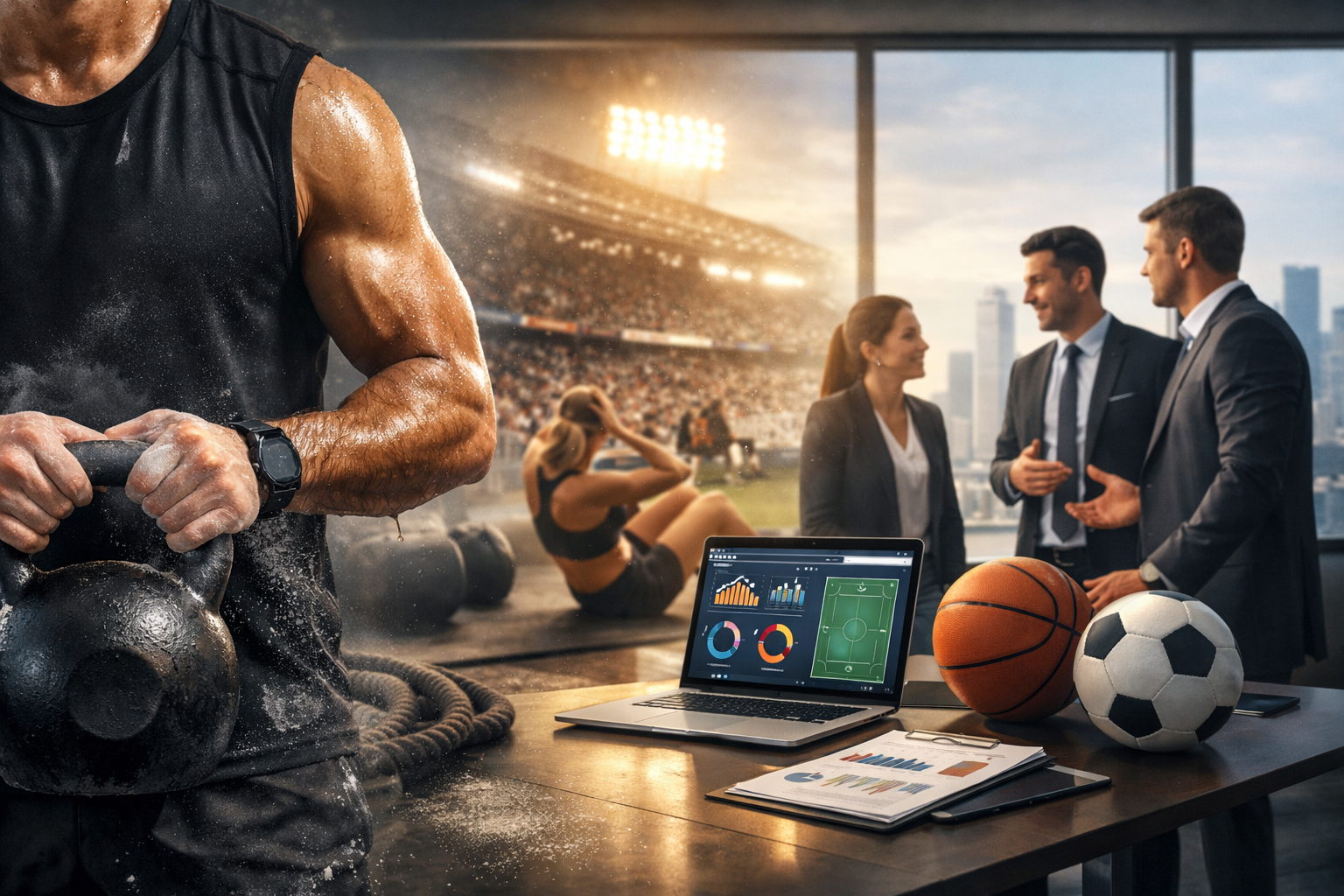
The New Sports Economy: Where Fitness Meets Business
Sports and fitness are no longer separate lanes—today they form a shared marketplace that blends performance, entertainment, wellness, and technology. Traditional sports organizations now operate alongside fitness brands, creators, wearables companies, and digital platforms, all competing for the same scarce resource: attention and loyalty. This convergence has expanded the definition of “sports business” from ticket sales and sponsorships to recurring subscriptions, community-based commerce, data licensing, and direct-to-consumer experiences.
For leaders across leagues, clubs, gyms, retailers, and platforms, the opportunity is clear: the customer relationship can be continuous rather than seasonal. But that also means expectations are higher—fans and members want personalization, measurable progress, and values-driven brands, not just results on a scoreboard.
Core Revenue Drivers in Sports & Fitness
The sports business has diversified into multiple revenue streams, many of which overlap with the fitness sector. The strongest operators treat revenue like a portfolio rather than a single pipeline.
- Media and content monetization: Broadcast rights, streaming deals, short-form social content, podcasts, and behind-the-scenes series extend reach and create new inventory for advertisers.
- Sponsorships and partnerships: Brands increasingly demand measurable outcomes—lead generation, app installs, in-store traffic—pushing rights holders to offer performance marketing alongside traditional logo placement.
- Merchandise and retail: Limited drops, collaborations, and athlete-led product lines turn fandom and fitness identity into high-margin commerce.
- Memberships and subscriptions: Gym memberships, digital training apps, hybrid models, and “season passes” for experiences provide recurring revenue and more predictable cash flow.
- Events and experiences: Races, tournaments, training camps, fan festivals, and wellness retreats monetize participation and create content for future marketing.
- Data and performance services: Wearables, testing labs, analytics platforms, and coaching tools package performance insights for consumers and elite organizations alike.
Technology as the Competitive Equalizer
Technology has lowered barriers to entry while raising the standard for user experience. A boutique studio can compete with a major chain through superior community building and digital engagement. Meanwhile, a league can behave like a media company—producing daily content, building apps, and selling targeted ads.
Wearables, Metrics, and the “Quantified Athlete”
Wearables have turned training into a measurable journey. Heart rate variability, sleep tracking, power output, and recovery scores are now mainstream. For the business, this creates opportunities for premium tiers, coaching upsells, and partnerships with healthcare and insurance. It also introduces risk: consumers may churn if the data feels confusing or the product doesn’t translate metrics into clear actions.
AI Coaching and Personalized Programming
Personalization is quickly becoming table stakes. AI-driven training plans, adaptive workouts, and chat-based coaching reduce friction and improve retention. The most effective products combine algorithmic recommendations with human credibility—coaches, athletes, or trusted educators—because motivation is emotional as much as rational.
The Attention Market: Media, Creators, and New Fan Behavior
Sports business is increasingly an attention business. Highlights and commentary travel faster than full games, and fitness content competes in the same feeds as sports clips. Creators—trainers, athletes, analysts—act as micro-networks, shaping purchase decisions and community norms.
Organizations that once relied on broad-reach broadcast are now building multi-channel funnels: short-form video to capture interest, longer stories to deepen engagement, and memberships or ticketing to convert. The key shift is from one-time transactions to lifetime value, supported by consistent communication and meaningful experiences.
Community and Identity: The True Moat
In both sports and fitness, community is the retention engine. People stay for belonging as much as for performance. Clubs cultivate lifelong fandom; fitness brands build tribes around shared goals and lifestyles. Communities create organic marketing through word-of-mouth, user-generated content, and social proof.
Designing for Loyalty
- Rituals and milestones: streaks, badges, PR celebrations, season ticket holder benefits, and member recognition.
- Local activation: pop-up workouts, watch parties, charity runs, and co-branded events with local businesses.
- Two-way communication: surveys, community councils, and transparent responses to feedback improve trust.
Regulation, Ethics, and Reputation Risk
The modern sports & fitness ecosystem also faces rising scrutiny. Data privacy regulations shape how companies collect and use health and location data. Sponsorship ethics matter—partnerships with betting, alcohol, or supplements can be lucrative but reputationally sensitive. Athlete welfare, safe sport policies, and mental health resources are now business imperatives, not just moral ones.
Brands that treat trust as an asset—clear consent flows, responsible claims, and transparent pricing—tend to outperform over time, especially as consumers grow more skeptical of hype-driven wellness marketing.
Business Models to Watch
Several models are defining the next phase of growth, particularly as customer acquisition costs rise and differentiation becomes harder.
- Hybrid fitness: in-person experiences supported by digital programming that travels with the customer.
- Direct-to-consumer sports brands: apparel and equipment companies building content, communities, and athlete partnerships without relying on traditional retail alone.
- Corporate wellness and performance: employers investing in fitness benefits, coaching, and preventive health as a talent and productivity strategy.
- Experiential commerce: retail spaces doubling as training hubs, recovery lounges, and event venues.
- Niche sports growth: pickleball, padel, women’s sports, adaptive sports, and emerging leagues capturing underserved audiences with modern media strategies.
Strategic Playbook: How Organizations Win
Winning in sports business requires balancing brand, operations, and product. The organizations that thrive tend to share a few principles: they know their audience deeply, package value into clear tiers, and build ecosystems where content fuels community and community fuels revenue.
- Clarify the core customer promise: performance, entertainment, wellbeing, or belonging—and design every touchpoint around it.
- Invest in retention: onboarding, habit formation, and customer success can outperform constant acquisition.
- Measure what matters: engagement, churn, lifetime value, and cohort behavior—not just vanity metrics.
- Create partnership fit: sponsor alignment should enhance the experience, not distract from it.
- Build adaptable operations: flexible pricing, scalable content, and modular programming help weather seasonal and economic shifts.
Conclusion: The Convergence Will Accelerate
Sports and fitness are merging into a single commercial landscape where fans behave like members and members behave like fans. The biggest opportunities sit at the intersections: media plus training, community plus commerce, and data plus coaching. As this convergence accelerates, the strongest sports businesses will be those that deliver measurable value, authentic connection, and a consistent experience—on the field, in the gym, and everywhere in between.