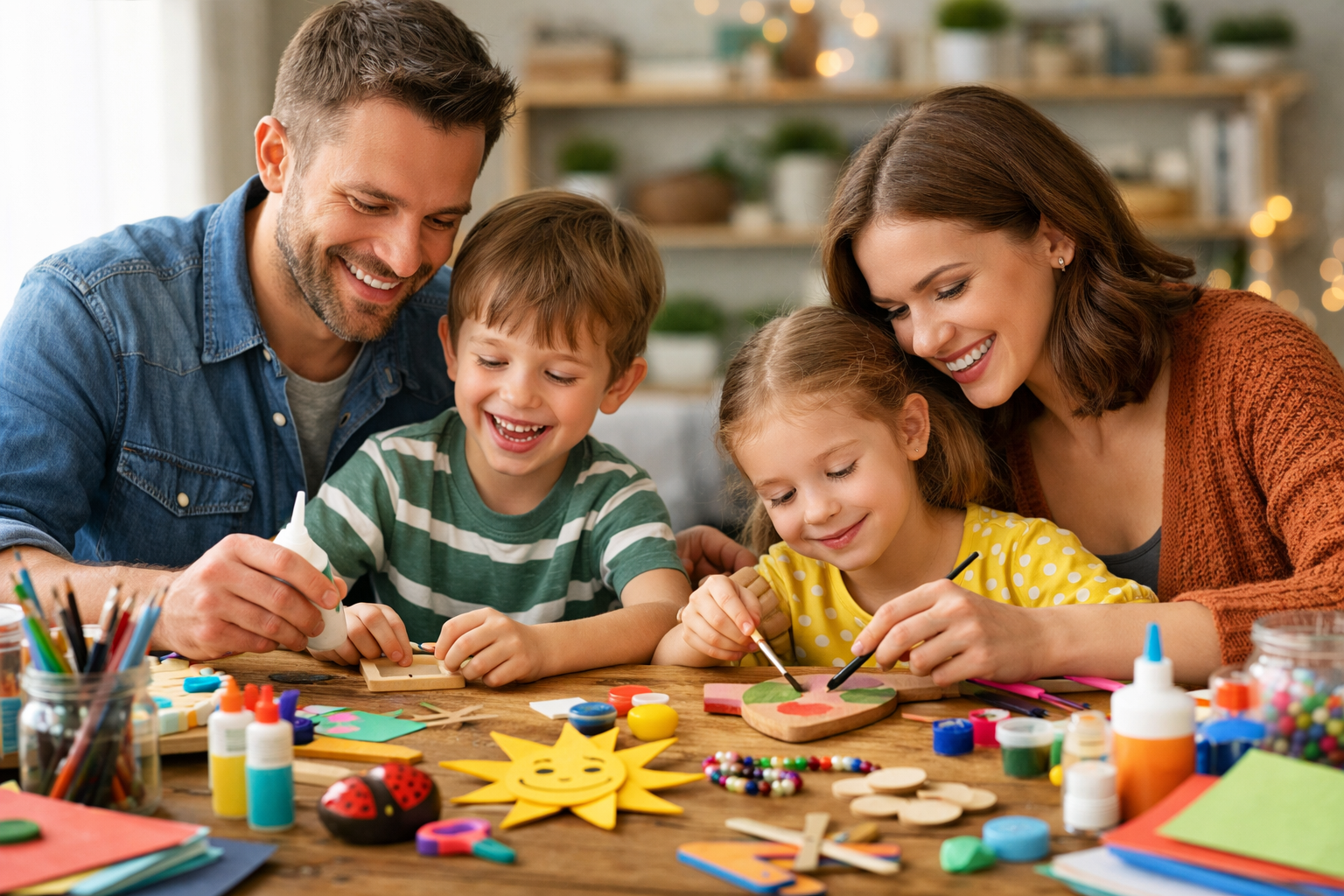
Why Activities and Crafts Matter in Family Life
Crafting together is more than “keeping kids busy.” Shared projects help children practice fine-motor control, problem-solving, creativity, and emotional regulation. For parents and caregivers, crafts offer a gentle way to connect—especially when conversation feels hard to start. When everyone’s hands are occupied, kids often open up naturally, and adults can model patience, flexibility, and joy in the process.
The best family activities don’t require perfect results. They work because they invite participation at different skill levels, welcome mistakes as part of learning, and create a sense of belonging. Over time, small traditions—Saturday craft bins, seasonal decorations, or “make-and-give” gifts—become anchors in family culture.
Setting Up a Stress-Free Craft Routine
A little structure makes crafting feel manageable, even on busy days. Consider these practical foundations:
- Create a simple supply kit: Keep scissors, washable glue, tape, markers, crayons, construction paper, a few paint colors, and recycled materials (cardboard, bottles, magazines) in a labeled bin.
- Choose a “yes space” for mess: A washable tablecloth, baking sheet for beads, or a designated craft corner reduces anxiety about spills.
- Plan for different attention spans: Have a “quick win” option (10 minutes) and a “deep dive” option (30–60 minutes) ready.
- Use a predictable cleanup routine: A short playlist for cleanup, a wipe-down step, and a finished-project drying zone can prevent power struggles.
Age-Range Tip: Build in Choice
To keep siblings engaged, let each child choose one element: color palette, theme, or the “special detail” (stickers, glitter, a favorite character). Choice increases buy-in and reduces comparisons.
5 Go-To Family Craft Activities (With Skill-Building Benefits)
1) Recycled “Maker Lab” Sculptures
Collect clean packaging—egg cartons, paper towel tubes, small boxes—and set out tape, glue, and markers. Challenge the family to build a creature, vehicle, or “invention that solves a problem.”
- Skills practiced: Engineering thinking, spatial reasoning, collaboration, perseverance.
- Parenting win: Easy to differentiate—toddlers can decorate while older kids design structures.
2) Family Story Stones
On smooth stones (or thick paper circles), draw simple icons: a star, a house, a cat, a rainbow, a mountain. Put them in a bag and take turns pulling three stones to invent a story together.
- Skills practiced: Language development, narrative sequencing, imagination, turn-taking.
- Parenting win: Great for quieter kids who express themselves more easily through characters.
3) DIY Gratitude or Kindness Garland
Cut paper into shapes (leaves, hearts, flags). Each person writes or draws one thing they appreciated that week, then string the pieces into a garland to hang in a shared space.
- Skills practiced: Emotional awareness, reflection, writing practice, family communication.
- Parenting win: Creates a gentle routine of noticing the positive without forcing big talks.
4) Nature Print Art
Collect leaves, small branches, or flowers. Brush washable paint onto the textured side of a leaf and press it onto paper. Experiment with layering colors and shapes.
- Skills practiced: Observation, sensory exploration, color mixing, patience.
- Parenting win: Pairs naturally with a walk, turning outdoor time into a full activity arc.
5) “Family Flag” or Crest
Design a flag that represents your family: favorite activities, values, and inside jokes. Add symbols like a book for reading, a pan for cooking, or a wave for beach trips.
- Skills practiced: Identity-building, symbolism, teamwork, decision-making.
- Parenting win: Helps children feel secure and proud of their shared story, especially during transitions (new school, moving homes).
Keeping Craft Time Positive (Even When It Gets Chaotic)
Family crafting can unravel when expectations are too high or kids feel corrected. A few mindset shifts help:
- Praise process over product: “You tried three ways to attach that wheel,” rather than “That looks perfect.”
- Model “mistake recovery”: Say out loud, “Oops—my glue blobbed. I’m going to add paper on top,” showing flexibility.
- Assign roles: One child sorts supplies, another chooses music, another is “photo documenter.” Roles reduce conflict.
- Use time boundaries: A visible timer can prevent burnout and help kids transition to cleanup.
Seasonal and Weekend Ideas to Keep Things Fresh
When you tie crafts to seasons or family events, you’ll never run out of inspiration:
- Spring: Seed packet collages, rain cloud mobiles, pressed flower bookmarks.
- Summer: DIY sidewalk chalk paint, cardboard boat builds, sun-print (cyanotype-style) paper experiments.
- Fall: Leaf rubbings, gratitude garlands, recycled lanterns.
- Winter: Paper snowflakes with pattern challenges, homemade wrapping paper stamps, “comfort cards” for neighbors or relatives.
Safety and Practical Tips for All Ages
A few guardrails keep creativity fun:
- Choose washable, non-toxic materials and supervise scissors, small beads, and hot glue around young children.
- Prep a “tiny tray” for little kids: Offer a smaller selection to reduce overwhelm and spills.
- Protect clothing and surfaces: An old button-down shirt works as a smock; newspaper or a plastic mat simplifies cleanup.
- Store works-in-progress in a labeled box so kids can return without restarting (and without taking over the dining table).
Turning Crafts Into Family Connection
The real magic of activities and crafts is the relationship built in the margins: the shared laughter when tape sticks to your elbow, the quiet teamwork while painting, the pride of displaying something made together. If you want crafts to become a lasting tradition, start small: one bin, one table covering, one simple project a week. Over time, those small moments add up to a family rhythm—one where creativity becomes a natural language of love.