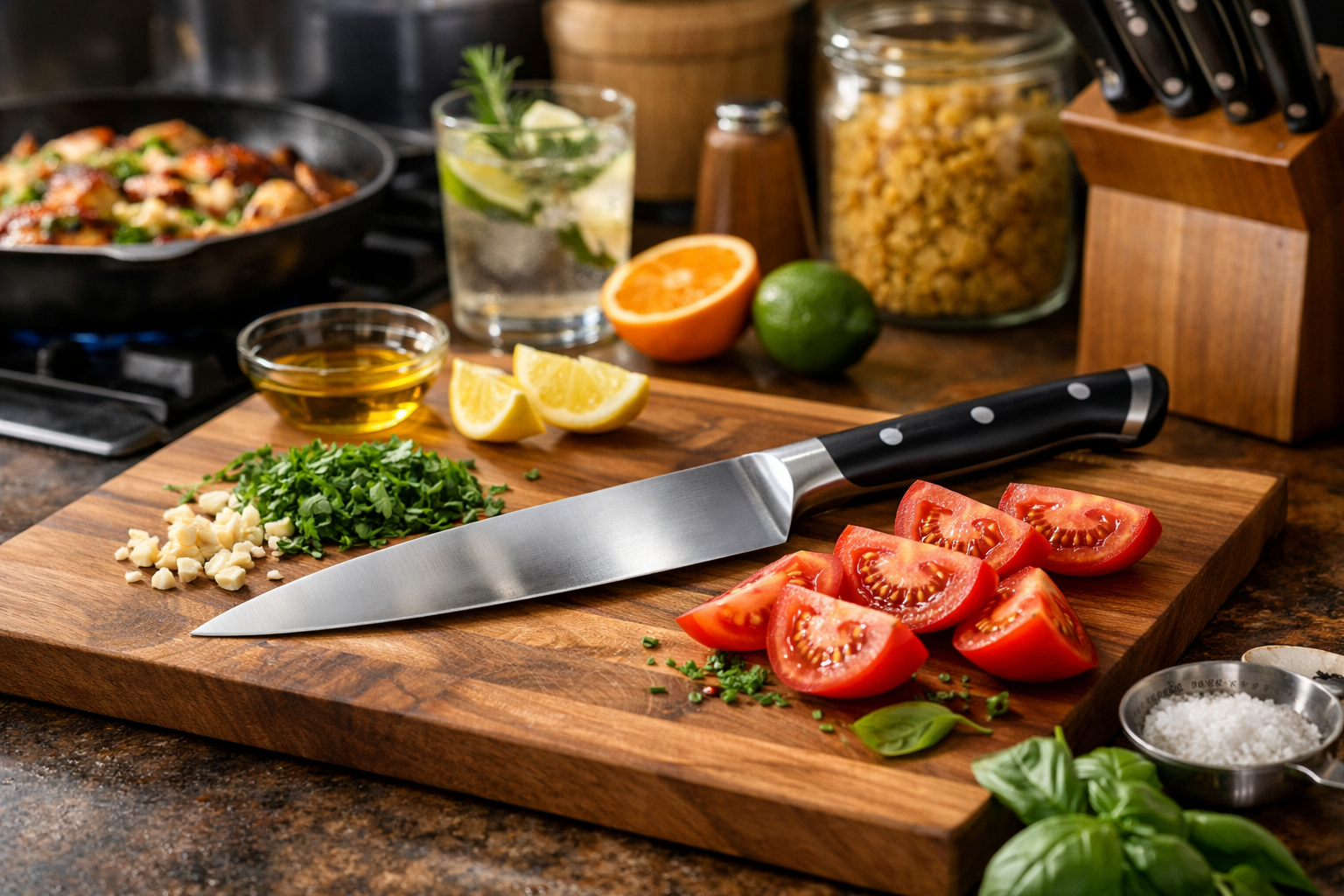
Build a Kitchen Setup That Works (Not Just Looks Good)
A functional kitchen isn’t about owning every gadget—it’s about removing friction from everyday tasks. Start with a few reliable tools and a workflow that supports how you actually cook.
- Keep a “daily driver” zone: Store the cutting board, chef’s knife, salt, pepper, and cooking oil within arm’s reach of your main prep area.
- Choose the right cutting board: Wood or quality plastic is gentler on knives than glass or stone, and it’s safer because food is less likely to slip.
- Use small bowls for prep: A few ramekins or bowls make “mise en place” easy—measuring and staging ingredients prevents overcooking while you hunt for spices.
Knife Skills: The Fastest Way to Improve Results
Good knife habits improve speed, consistency, and safety. Consistent sizes also mean even cooking—no more burnt tips and raw centers.
Focus on three fundamentals
- Stabilize your cutting board: Place a damp towel or non-slip mat underneath so it doesn’t slide.
- Use the “claw” grip: Curl fingertips under and guide the knife with knuckles, not fingertips.
- Keep knives sharp: A sharp blade requires less force and is less likely to slip. Hone regularly with a honing rod and sharpen periodically (at home with a stone or via a service).
Quick tip: If onions make you tear up, chill them for 10 minutes and use a sharp knife—dull blades crush cells and release more irritants.
Heat Control: Learn What Your Pan Is Really Doing
Heat control is the difference between “fine” and “restaurant-level.” Many cooking frustrations come from pans that are too cold (steaming instead of browning) or too hot (burning spices, scorching butter).
Simple heat cues to remember
- Preheat, then add fat: For sautéing, warm the pan first, add oil, then add food once the oil shimmers (not smokes).
- Don’t overcrowd: Too much food drops the pan temperature and creates steam. Cook in batches for better browning.
- Match pan to task: Use stainless or cast iron for searing, nonstick for delicate eggs or fish, and heavy pots for soups and sauces.
Butter burns quickly. For higher heat, combine butter with a little neutral oil, or use clarified butter (ghee) to keep the flavor without the burn.
Seasoning: Layer Flavor Instead of Chasing It at the End
Seasoning isn’t just “add salt.” It’s the timing, the balance, and knowing which flavors amplify others.
Season in stages
- Salt early for depth: Add a little salt during cooking so it dissolves and penetrates, not just sits on the surface.
- Finish with brightness: A squeeze of lemon, a splash of vinegar, or a spoon of pickled brine can wake up a dish right before serving.
- Balance with sweetness or fat: If a sauce tastes harsh or too acidic, try a pinch of sugar or a drizzle of olive oil rather than more salt.
Upgrade your salt strategy: Keep kosher salt for cooking (easy to pinch) and flaky salt for finishing (better texture and pop).
Smart Storage: Fresher Ingredients, Less Waste
Food waste often comes from poor storage rather than overbuying. A few small changes can keep produce crisp and leftovers safe.
Storage habits that pay off
- Label leftovers: Add the date and what it is. This one habit prevents “mystery container” syndrome.
- Cool food safely: Divide large portions (soups, rice, pasta) into shallow containers so they cool faster in the fridge.
- Use the right produce zones: Store herbs like flowers (trim stems, keep in a jar with water, loosely cover). Keep mushrooms in a paper bag, not sealed plastic.
- Freeze in portions: Freeze sauces, stock, cooked grains, and chopped herbs in small portions for quick weeknight meals.
Fridge organization trick: Make a “use first” bin for items nearing their end—half a cucumber, leftover roast vegetables, or an open tub of yogurt.
Food Safety Basics You Can Actually Stick With
Safe cooking doesn’t require paranoia—just a consistent routine.
- Separate raw and ready-to-eat: Use separate boards (or wash thoroughly) and keep raw meat below other foods in the fridge.
- Wash hands at the right times: After handling raw proteins, eggs, and after touching the trash, phone, or pets.
- Use a thermometer: It removes guesswork for chicken, pork, and reheating leftovers. Consistency improves dramatically when you stop relying on “looks done.”
Note: Washing raw chicken is not recommended—it can spread bacteria via splashing. Proper cooking is what makes it safe.
Better Drinks at Home: Small Techniques, Big Results
Great food deserves great drinks, and you don’t need a full bar cart. A few fundamentals elevate coffee, tea, and simple cocktails or mocktails.
Coffee and tea improvements
- Use fresh water: Stale-tasting water makes stale-tasting coffee and tea. Filtered water often helps.
- Mind temperature: Boiling water can scorch delicate teas. Let boiled water sit 1–3 minutes for many green or oolong teas.
- Store beans properly: Keep coffee beans in an airtight container away from light and heat. Grind closer to brewing when possible.
One simple formula for balanced drinks
- Acid + sweetness + dilution: Citrus (or vinegar shrubs), a sweetener (simple syrup, honey), and water/ice creates balance. Taste and adjust in small increments.
- Use cold glassware: Chilling a glass improves texture and keeps flavors crisp, especially for stirred drinks and iced teas.
- Make “ice upgrades”: Large cubes melt slower. For flavor, freeze citrus peel or berries into ice for sparkling water.
Cook Once, Eat Well All Week: High-Utility Prep
Meal prep doesn’t have to mean repetitive meals. Instead, prep versatile components that mix and match into different dishes.
- Roast a sheet pan of vegetables: Use in salads, grain bowls, omelets, wraps, or blended into soup.
- Cook a pot of grains: Rice, farro, or quinoa becomes a base for stir-fries, soups, and breakfast bowls.
- Make one sauce: A vinaigrette, yogurt-herb sauce, or peanut-lime dressing can transform simple proteins and vegetables.
With sharper knife habits, better heat control, smarter storage, and a few drink fundamentals, your kitchen becomes easier to use—and your food and drinks become consistently more delicious.