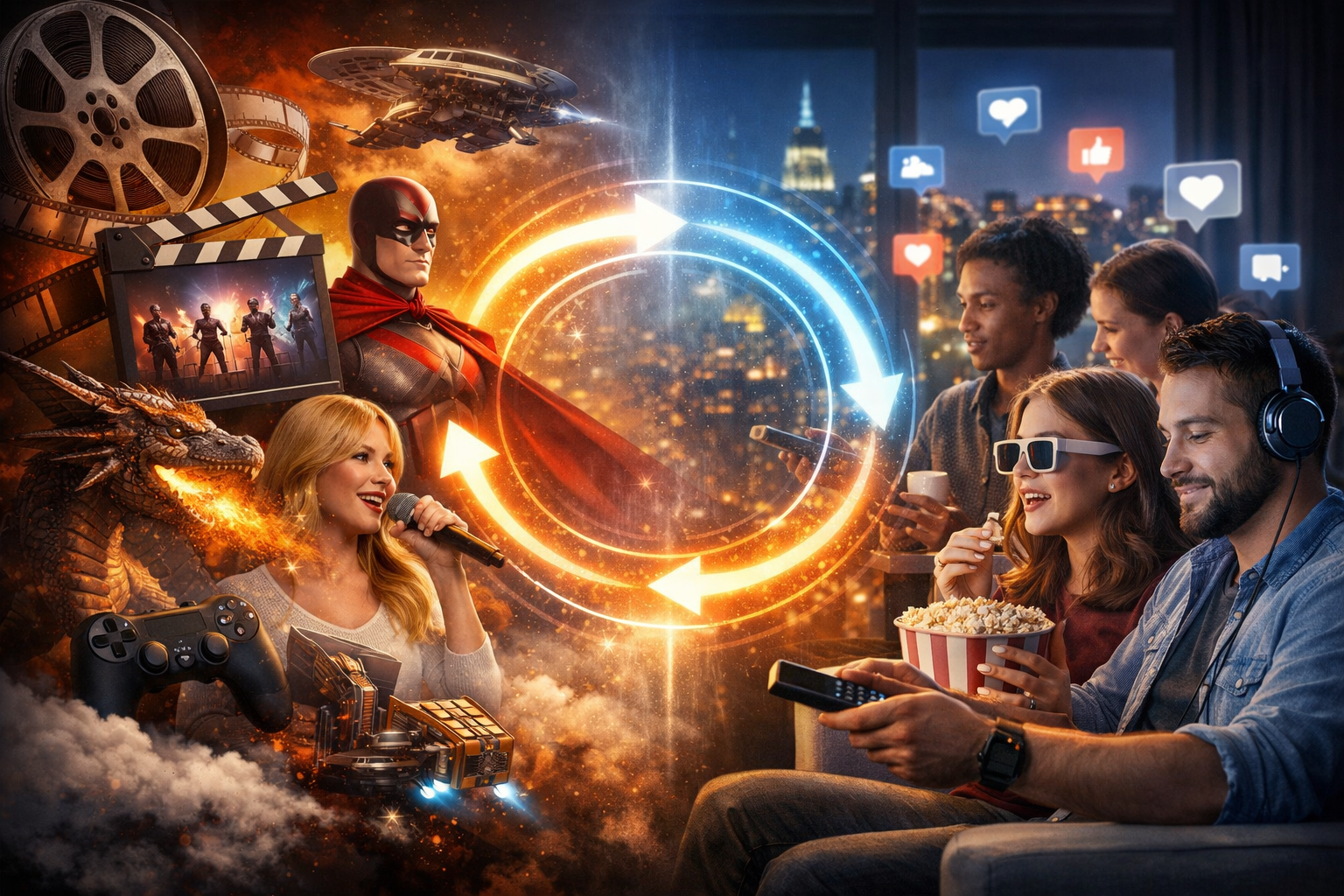
Pop Culture as a Living Conversation
Entertainment and pop culture used to feel like a one-way broadcast: studios released movies, labels promoted albums, and audiences consumed what reached them through radio, TV, and print. Today, pop culture behaves more like a living conversation—iterative, reactive, and shaped in real time by social media, streaming data, and online communities. A dance trend can boost an overlooked track to the top of the charts, a single scene can become a meme that reframes an entire series, and a fan theory can influence how viewers interpret a finale before it even airs.
This feedback loop is not simply “the internet talking.” It is a structural shift in how entertainment is created and sustained. Fans are no longer just an audience; they’re a distribution network, a marketing department, and sometimes an informal writers’ room. Meanwhile, creators—whether major studios or independent artists—must navigate attention economies where visibility is as valuable as craft.
The New Gatekeepers: Platforms, Algorithms, and Communities
In the past, a small set of gatekeepers decided what rose to prominence. Now, gatekeeping is distributed, but not eliminated. Streaming platforms, short-form video apps, recommendation engines, and influencer networks all shape what becomes “everywhere.” Algorithms reward engagement, not necessarily quality, and engagement often favors content that is easy to share: surprising moments, emotional reveals, quotable lines, and recognizable references.
At the same time, niche communities can propel content to mainstream awareness. A genre series with modest numbers can become culturally dominant if it inspires intense discussion, fan edits, cosplay, and weekly recap culture. Pop culture’s center is increasingly the result of many small centers—fandom hubs, subreddits, group chats, reaction channels—synchronizing at once.
How Trends Travel Now
- Clip-first discovery: Viewers often meet a show through a 20-second clip or meme before they ever see episode one.
- Soundtrack resurrection: Older songs return via viral audio, turning catalog tracks into new hits.
- Creator-audience loops: Artists monitor reactions and adjust setlists, character arcs, or promotional strategies accordingly.
- Community amplification: Fan accounts can outpace official marketing, translating, subtitling, and contextualizing content globally.
Fandom: Identity, Belonging, and Power
Fandom has evolved from a hobby into an identity marker. Wearing a tour hoodie, quoting a franchise, or participating in a fandom’s inside jokes can signal belonging—especially online, where shared references function like cultural shorthand. This can be positive: fandom builds community, encourages creativity, and provides a social outlet. Fan art, fan fiction, edits, and analysis can deepen appreciation and elevate overlooked themes.
But fandom also has power—and power comes with friction. Organized fan communities can push for renewals, influence casting conversations, or spotlight industry injustices. They can also become arenas for conflict, including harassment campaigns and purity tests about who is a “real” fan. The healthiest fandom spaces tend to emphasize curiosity and creativity over gatekeeping, leaving room for newcomers and different interpretations.
Celebrity in the Age of Constant Access
Celebrity culture has always been a mix of aspiration and scrutiny, but the tempo has changed. Social platforms invite parasocial intimacy: a celebrity’s posts can feel like direct contact, even though the relationship is one-sided. This dynamic can humanize public figures and create genuine connection, yet it also raises expectations of perpetual availability and flawless behavior.
Modern celebrity is increasingly “brand-adjacent.” Stars are expected to be entrepreneurs, commentators, and content producers. A successful actor may also run a beauty line, curate a lifestyle image, and maintain a narrative across interviews, photos, and online discourse. The result is a public persona that must be continuously managed—and a culture that continuously evaluates it.
Why Scandals Spread So Fast
- Context collapse: A moment intended for one audience gets judged by many, each with different norms.
- Speed over nuance: Hot takes travel faster than clarifications, and first impressions often stick.
- Attention incentives: Outrage drives clicks and shares, turning controversy into a distribution engine.
The Business of Attention: Streaming, Franchises, and IP
Entertainment is shaped by economics, and the current economy rewards predictability. Franchises and recognizable intellectual property (IP) reduce risk: familiar worlds come with built-in audiences, merchandising potential, and multi-platform expansion. That’s why sequels, reboots, spin-offs, and cinematic universes have become so common.
Streaming changed viewing habits, but it also changed creative incentives. Shows may be designed for bingeing, with cliffhangers and rapid pacing. Metrics like completion rate and retention can influence what gets renewed. Meanwhile, music consumption has shifted toward playlists and single-track virality, encouraging frequent releases and hook-forward songwriting.
Yet audiences still crave originality—especially when it feels emotionally honest or culturally specific. The tension between formula and experimentation is one of the defining traits of today’s pop culture landscape.
Global Pop Culture: A Two-Way Street
Pop culture is increasingly global by default. International series can dominate worldwide charts, and artists can build audiences across continents without traditional gatekeepers. This globalization is not simply “exporting” one culture; it’s a two-way exchange. Viewers pick up slang, fashion, and storytelling styles from other regions, and local creators respond with hybrid forms that reflect multiple influences at once.
However, global reach also introduces questions about translation and context. Jokes, historical references, and social norms do not always travel neatly. The most successful global hits often balance specificity (a strong sense of place) with universality (themes like family, ambition, love, and identity).
What Pop Culture Teaches Us About Ourselves
Pop culture can be dismissed as “just entertainment,” but it frequently acts as a mirror. The stories that gain traction reveal what people fear, desire, and argue about. A surge in nostalgia may signal uncertainty about the future. A wave of antihero dramas can reflect skepticism toward institutions. Viral comedy can become a coping mechanism for collective stress.
It also shapes language and behavior. Catchphrases, aesthetics, and micro-trends offer people a way to communicate quickly—sometimes playfully, sometimes politically. Even seemingly trivial debates (the best season, the definitive album, the correct ship) are often proxies for deeper questions about taste, identity, and belonging.
How to Engage With Pop Culture More Intentionally
You don’t have to opt out of pop culture to be thoughtful about it. A more intentional approach can deepen enjoyment while reducing burnout from the endless feed.
- Balance hype with curiosity: Try one “everyone’s talking about it” title, then seek one lesser-known gem.
- Follow creators, not just brands: Directors, writers, choreographers, and editors often reveal the craft behind the product.
- Notice the algorithm’s nudges: If your feed feels repetitive, change inputs—search, save, and share different things.
- Let art be complicated: You can love a work, critique it, and discuss it without turning the conversation into a verdict.
Ultimately, pop culture is a shared language—one that evolves at the speed of the internet. The more we understand the forces behind it, the more we can choose what to amplify, what to question, and what to celebrate.