Why Game Development Matters in Gaming
Gaming is the visible surface: players explore worlds, master mechanics, and share experiences. Game development is the machinery underneath, where art, code, audio, and design meet to create systems that feel coherent, responsive, and fun. Modern development is also shaped by player expectations—fast updates, cross-platform support, accessibility options, and live communities—making the process both more powerful and more complex than ever.
Whether you’re building an indie puzzle game or a large-scale online shooter, the fundamentals are similar: define a player experience, implement it reliably, test it relentlessly, and ship in a way that supports your audience and your studio.
The Core Stages of Development
1) Concept and Pre-Production
Pre-production is where risk is reduced on paper before it becomes expensive in production. Teams clarify the game’s “promise” (what makes it special), target platforms, audience, scope, and feasibility. A strong pitch often includes a short design brief, art references, and a technical plan.
- High concept: A one-sentence hook that explains the fantasy and core activity.
- Constraints: Team size, time, budget, and platform limitations.
- Design pillars: 3–5 guiding principles (e.g., “skill-based combat,” “player-driven discovery”).
2) Prototyping and Vertical Slice
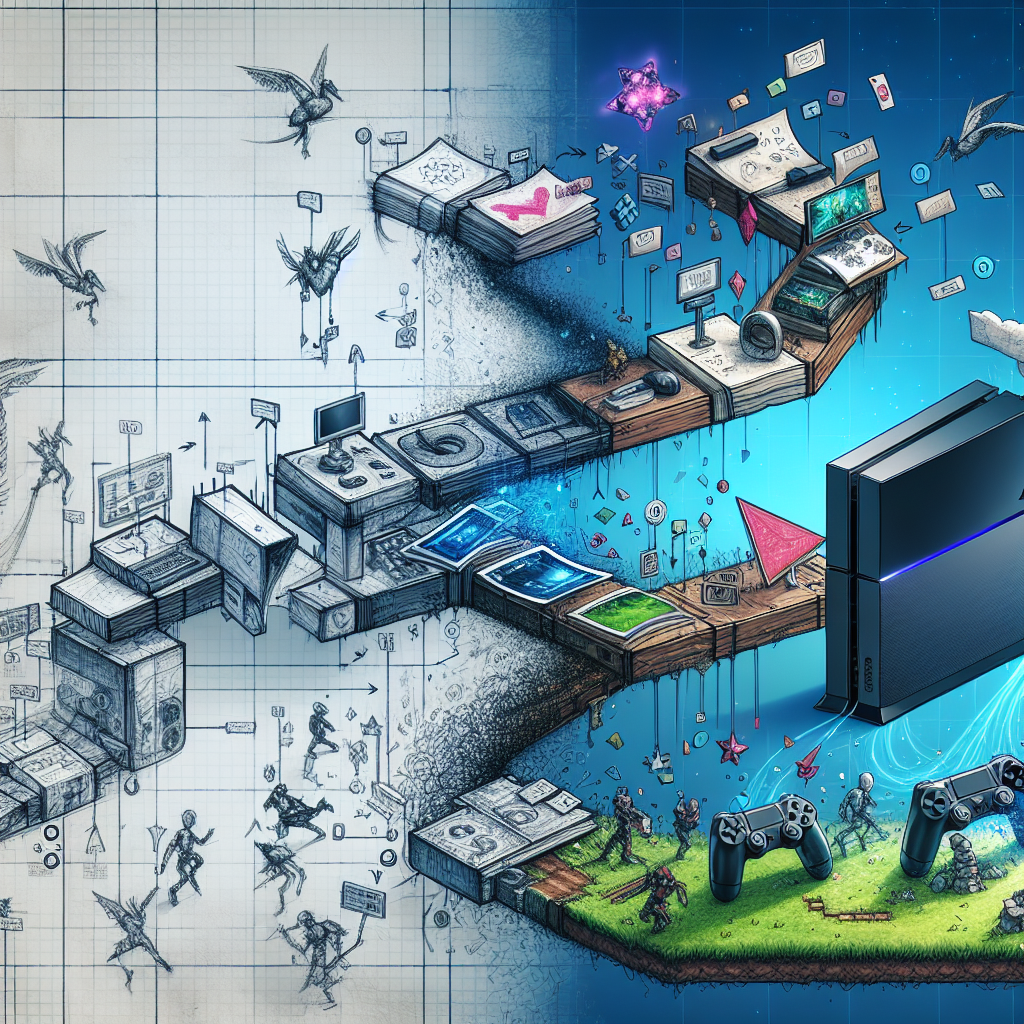
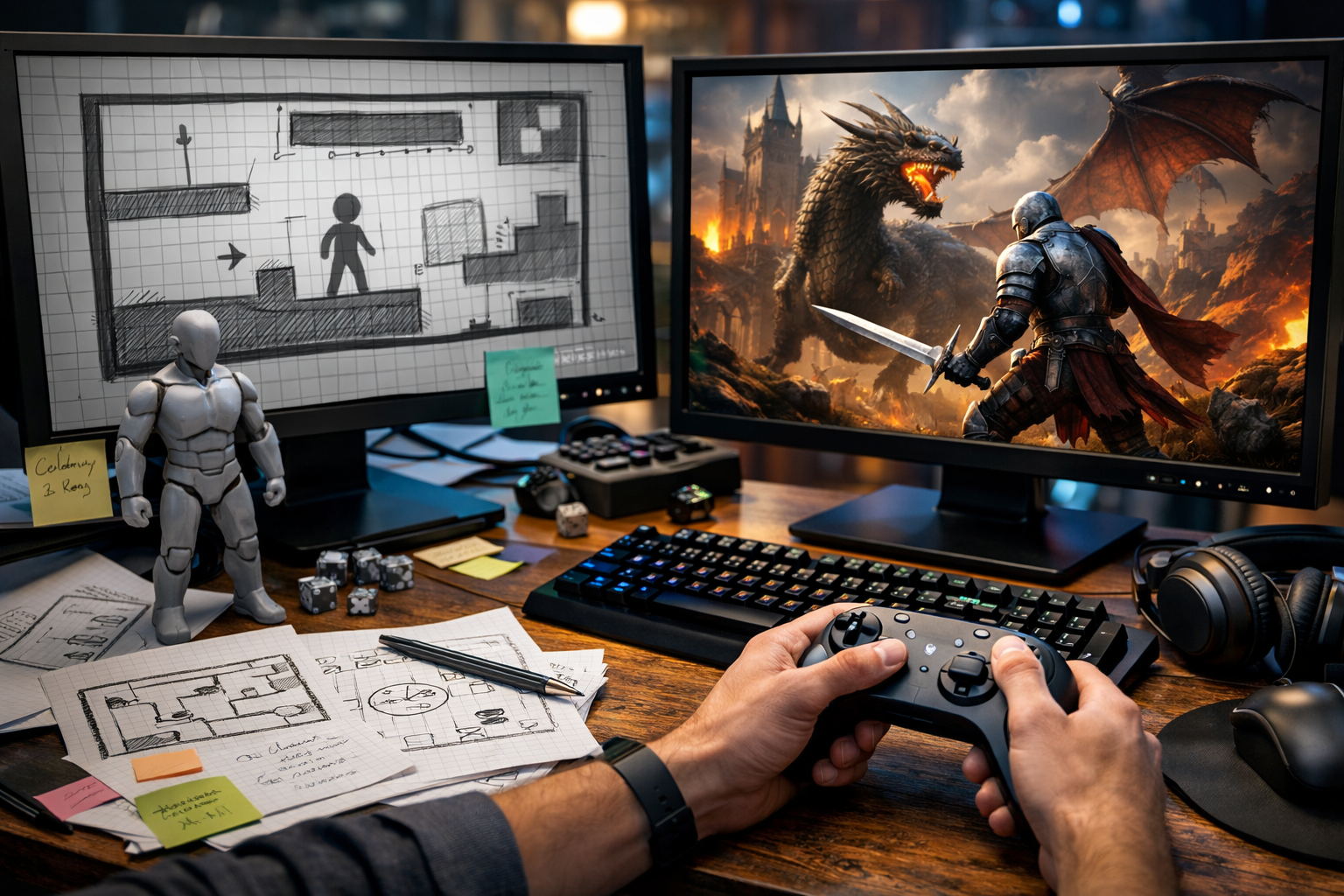
Prototypes answer the question: “Is it fun?” They prioritize speed over perfection—placeholder art, simplified UI, and minimal content. Once the core loop is validated, many teams create a vertical slice: a small, polished section that represents final quality across gameplay, art, audio, and performance.
The vertical slice is crucial for aligning the team, convincing stakeholders, and uncovering hidden production costs (like animation time or level-building complexity).
3) Production
Production is the longest phase: building levels, implementing systems, creating assets, writing narrative, and integrating everything into a stable game. This is where pipelines matter—naming conventions, version control, code reviews, and clear ownership prevent chaos.
- Content creation: Levels, quests, characters, items, and cinematics.
- Systems: Combat, progression, economy, AI, multiplayer, saving/loading.
- UX/UI: Menus, feedback, accessibility, onboarding, tutorials.
4) Testing, Polish, and Optimization
Polish is not just “making it pretty.” It’s improving readability, responsiveness, and clarity so players understand outcomes and feel in control. Optimization is equally critical: stable frame rates, fast loading, and predictable network behavior can define whether a game feels premium.
Testing includes functional QA (bugs), compatibility (different devices), usability (player confusion), and balance (difficulty curves, economy tuning). Many teams also run closed betas to measure retention, matchmaking health, and server load.
5) Launch and Live Operations
Shipping is no longer the finish line. Patches, content updates, events, and community management keep games healthy. Analytics can help identify where players drop off, which features are underused, and what content drives engagement—provided it’s interpreted with care and supported by qualitative feedback.
Key Disciplines and How They Collaborate
Game development is a team sport. Even solo developers wear multiple hats, juggling trade-offs between creative ambition and technical constraints.
- Game Design: Defines mechanics, rules, balance, and player goals.
- Programming/Engineering: Builds gameplay code, tools, performance, networking, and platform integration.
- Art: Creates characters, environments, UI, VFX, and animation with a consistent style.
- Audio: Sound effects, music, spatial audio, voice pipelines, and mix.
- Production: Scheduling, communication, risk tracking, and milestone planning.
- QA and User Research: Finds issues, validates design goals, and collects actionable player feedback.
Strong collaboration often hinges on shared vocabulary. Designers explain intent and edge cases; engineers communicate technical constraints; artists define budgets (poly counts, texture sizes) that keep performance predictable.
Engines, Tools, and Technical Foundations
Choosing an engine shapes workflow and possibilities. Popular options include general-purpose engines that support 2D and 3D, as well as custom engines built to meet specific performance or feature requirements. What matters most is not the brand name, but whether the toolchain matches your team’s skills and your game’s needs.
- Engine capabilities: Rendering, physics, animation, UI systems, networking support.
- Tooling: Level editors, scripting, build pipelines, profiling tools, asset importers.
- Version control: Essential for teams; supports branching, reviews, and safe iteration.
Technical decisions should be tied to player experience. If your design depends on precise timing, input latency and frame pacing are core features—not afterthoughts.
Designing the Player Experience
Core Loop, Feedback, and Flow
Most games can be described as a loop: the player takes an action, the game responds, the player learns, and then repeats with higher stakes. Clear feedback—visual, audio, and tactile (like controller vibration)—teaches players what happened and why.
- Clarity: Players should understand goals and consequences.
- Challenge: Difficulty should rise with player skill, not surprise spikes.
- Reward: Rewards can be narrative, mastery, cosmetics, or progression.
Accessibility and Inclusivity
Accessibility features broaden your audience and often improve usability for everyone. Common options include remappable controls, subtitle customization, colorblind-friendly modes, difficulty assists, readable UI scaling, and motion reduction settings.
Building accessibility early is more cost-effective than retrofitting it late, because UI layouts, input systems, and content presentation can be designed with flexibility in mind.
Production Reality: Scope, Milestones, and Sustainability
The biggest threat to many projects is uncontrolled scope. Adding “just one more feature” can ripple through animation, UI, tutorials, balance, and QA. Healthy teams define milestones that prove progress: a playable prototype, a vertical slice, an alpha (feature complete), a beta (content complete), and a release candidate.
Sustainable development also means protecting quality and people. Reasonable schedules, clear priorities, and stable tooling reduce burnout and ultimately improve the player experience.
Where Game Development Is Headed
Game development continues to evolve through better tooling, procedural content workflows, cross-platform ecosystems, and expanding player communities. But the heart of the craft remains the same: delivering a coherent experience through thoughtful design and disciplined execution. When teams align vision, technology, and player needs, games become more than products—they become places players return to, learn from, and share with others.