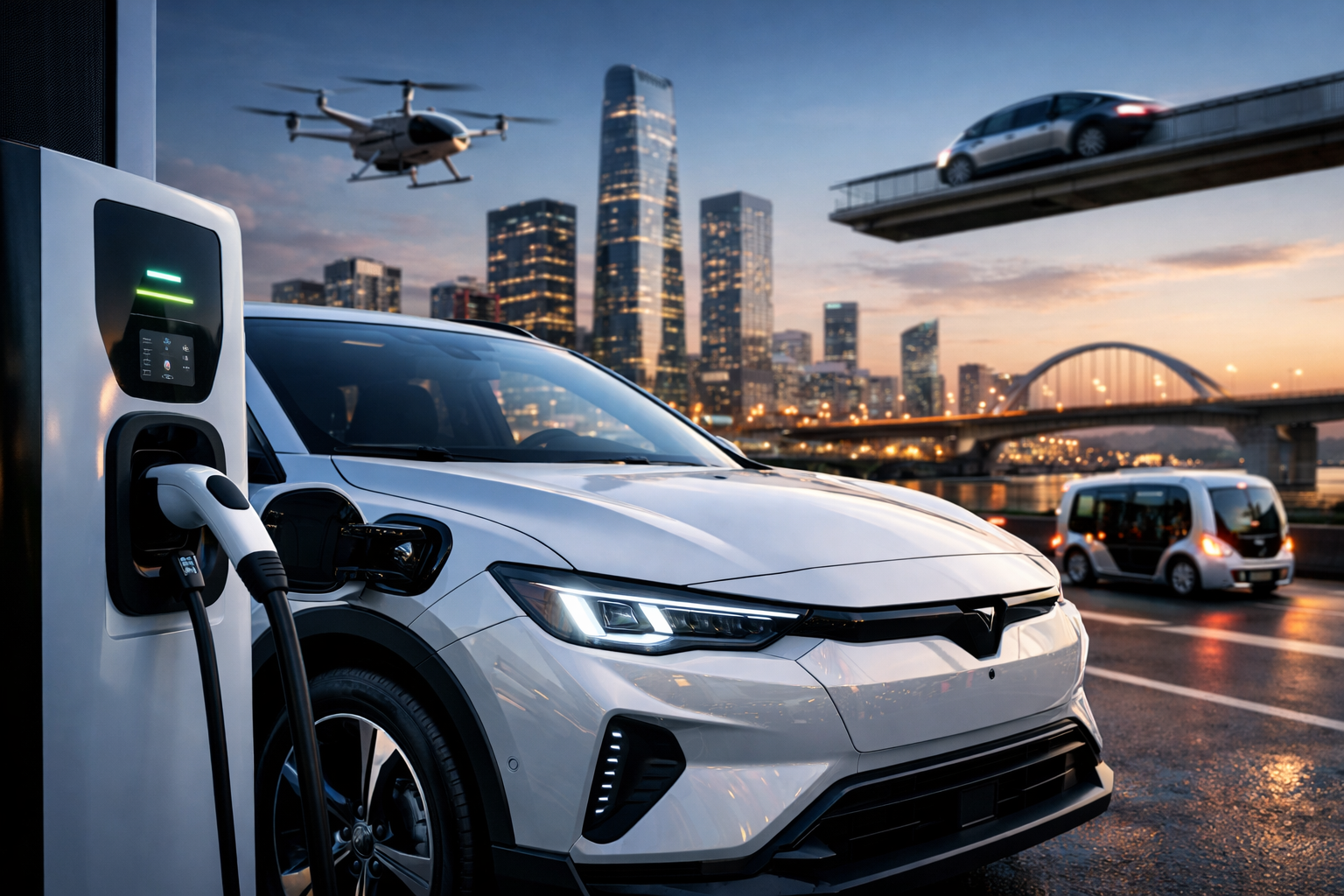
The Rise of EVs in Automotive and Transport
Electric vehicles, commonly known as EVs, have moved from niche products to a major force in the global automotive industry. Once viewed as futuristic alternatives, they are now central to conversations about sustainability, energy security, urban transport, and technological innovation. Governments, automakers, logistics fleets, and consumers are all investing in electrified mobility, making EVs one of the most important developments in modern transport.
At their core, EVs replace or reduce reliance on internal combustion engines by using electric motors powered by rechargeable batteries. This shift changes more than just the power source of a car. It influences how vehicles are designed, manufactured, maintained, fueled, and integrated into wider transportation systems.
What Counts as an EV?
The term EV covers several vehicle types, each offering different levels of electrification:
- Battery Electric Vehicles (BEVs): Fully electric vehicles that run entirely on battery power and require charging from an external source.
- Plug-in Hybrid Electric Vehicles (PHEVs): Vehicles with both a battery-powered motor and a traditional engine, allowing short electric-only trips and extended range with fuel.
- Hybrid Electric Vehicles (HEVs): Vehicles that use an electric motor alongside a combustion engine, but typically do not plug in.
- Electric buses, vans, trucks, scooters, and bikes: Electrification is expanding far beyond passenger cars, reshaping public and commercial transport as well.
Among these, BEVs are often the main focus when discussing the long-term future of zero-emission transport.
Why EV Adoption Is Accelerating
Several factors are driving the rapid growth of EVs. The first is environmental pressure. Transport is a major source of greenhouse gas emissions in many countries, and EVs offer a pathway to lower tailpipe emissions. When powered by renewable electricity, their overall environmental footprint can be significantly reduced.
Second, battery technology has improved dramatically. Modern lithium-ion batteries provide longer driving ranges, faster charging capabilities, and better durability than earlier generations. As production scales up, costs have also declined, making EVs more accessible to a broader market.
Third, policy support has played a major role. Tax incentives, fuel economy standards, low-emission zones, and public charging investments have encouraged both automakers and consumers to accelerate adoption. Many countries and cities have also announced long-term plans to phase out new petrol and diesel vehicles.
Finally, consumer awareness is changing. Drivers are increasingly attracted to EVs for their quiet operation, instant torque, lower maintenance needs, and lower running costs, especially where electricity is cheaper than gasoline or diesel.
Key Benefits of Electric Vehicles
Lower Operating Costs
EVs generally have fewer moving parts than conventional vehicles. Without oil changes, exhaust systems, or complex engine components, maintenance can be simpler and less frequent. Charging at home can also reduce everyday fuel expenses.
Improved Driving Experience
Electric motors deliver power instantly, which gives many EVs smooth and responsive acceleration. The absence of engine noise also creates a more refined and quiet cabin experience, particularly in urban driving conditions.
Reduced Local Emissions
BEVs produce no tailpipe emissions, which can help improve air quality in cities. This is especially valuable in densely populated areas where road traffic contributes to pollution-related health issues.
Compatibility with Smart Technology
Many EVs are designed as software-driven products. Features such as over-the-air updates, route planning based on charging availability, regenerative braking controls, and energy monitoring are increasingly common. In some cases, EVs can even support vehicle-to-home or vehicle-to-grid energy systems.
The Charging Challenge
Despite their advantages, EVs still face practical barriers. Charging infrastructure remains one of the biggest concerns. While home charging is convenient for many owners, not everyone has access to private parking or dedicated chargers. Apartment residents and drivers in rural or underserved areas may face limited options.
Public charging networks are expanding, but availability, reliability, speed, and payment compatibility can vary significantly. Fast chargers can reduce waiting times, yet charging still usually takes longer than refueling a combustion vehicle. For long-distance travel, this requires more planning and confidence in the charging network.
As EV adoption grows, electricity grids must also adapt. Smart charging, time-of-use pricing, and grid upgrades will become increasingly important to manage demand efficiently.
Battery Production and Sustainability
One of the most debated aspects of EVs is battery production. Manufacturing batteries requires raw materials such as lithium, nickel, cobalt, and graphite. Concerns around mining practices, supply chains, energy use, and recycling have led to increased scrutiny of the EV industry.
However, progress is being made. Battery chemistries are evolving to reduce dependence on scarce or controversial materials. Recycling technologies are improving, and second-life battery applications are being developed for energy storage. The long-term sustainability of EVs will depend not only on vehicle use, but also on how responsibly batteries are sourced, built, reused, and recycled.
EVs Beyond Private Cars
The impact of electrification extends far beyond personal mobility. Electric buses are helping cities reduce urban noise and emissions. Delivery companies are adopting electric vans to lower fleet costs and meet sustainability targets. Electric two-wheelers are becoming popular in congested cities, and heavy-duty truck electrification is gaining momentum for regional freight routes.
This broader shift shows that EVs are not simply a consumer trend. They are part of a wider transformation in how people and goods move. Integrated with renewable power, digital platforms, and intelligent infrastructure, EVs can support cleaner and more efficient transport ecosystems.
What the Future of EVs May Look Like
The future of EVs will likely be shaped by advances in battery density, charging speed, software integration, and manufacturing scale. Solid-state batteries, if commercialized successfully, could improve safety, reduce charging times, and increase range. More affordable models may also make EV ownership realistic for a larger share of the population.
At the same time, the success of EVs will depend on the surrounding ecosystem. Reliable charging networks, clean electricity generation, stable raw material supply chains, and supportive urban planning are all essential. EVs are not a complete solution to every transport problem, but they are a major part of the transition toward lower-emission mobility.
As automotive and transport industries continue to evolve, EVs are becoming more than an alternative. They are increasingly the benchmark for innovation, efficiency, and the next generation of road travel.