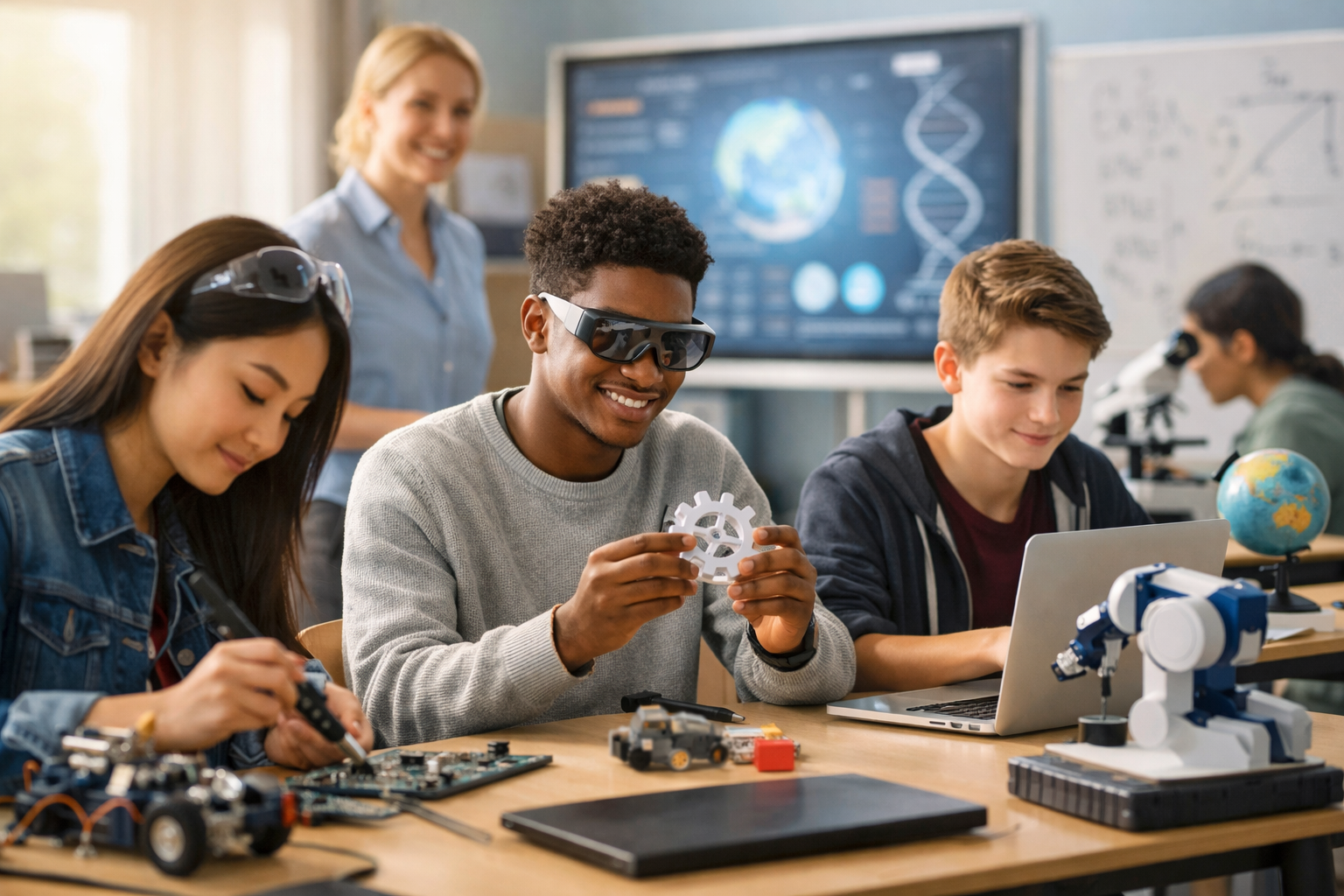
The Growing Importance of Skills Development in Education
Education is no longer judged only by how much information students can memorize. In today’s fast-changing world, success depends increasingly on what learners can do with knowledge. Skills development has therefore become a central goal of education, linking classroom learning with real-life performance, employability, creativity, and personal growth.
From primary schools to universities and professional training programs, educators are rethinking how learning is designed. The focus is shifting toward helping students communicate clearly, think critically, use digital tools confidently, collaborate with others, and continue learning throughout life. These abilities support not only career readiness but also active citizenship and individual resilience.
What Skills Development Really Means
Skills development refers to the intentional process of building practical, cognitive, social, and technical abilities that enable people to perform tasks effectively. It includes far more than vocational training. In a modern educational context, it combines academic understanding with application, reflection, and problem-solving.
Rather than treating subjects as isolated bodies of content, skills-based learning asks students to analyze ideas, ask better questions, present evidence, work in teams, and adapt to unfamiliar situations. This approach prepares learners for environments where change is constant and where many future job roles will require flexibility across disciplines.
Key categories of essential skills
- Cognitive skills: critical thinking, reasoning, analysis, decision-making, and creativity.
- Communication skills: writing, speaking, listening, presenting, and interpersonal interaction.
- Digital skills: information literacy, online collaboration, basic technical fluency, and responsible technology use.
- Social and emotional skills: empathy, self-awareness, teamwork, leadership, and conflict resolution.
- Practical and career skills: project management, time management, adaptability, and workplace professionalism.
Why Skills Development Matters for Learners
When education emphasizes skills development, students gain more than academic results. They become more confident in applying what they know. This is especially important because employers, communities, and institutions increasingly value individuals who can learn independently, solve problems, and contribute meaningfully in diverse settings.
Skills-focused learning also improves motivation. Students often engage more deeply when they understand how a lesson connects to real challenges or future opportunities. A science lesson linked to environmental problem-solving, for example, can strengthen both subject knowledge and analytical thinking. Similarly, group projects can develop collaboration and communication alongside content mastery.
Another major benefit is adaptability. Since industries, technologies, and social needs evolve rapidly, learners need transferable skills that remain useful even as specific tools or job titles change. A student who knows how to research, evaluate evidence, manage tasks, and learn new systems will be better prepared for long-term success than one who has only memorized fixed information.
The Role of Teachers and Learning Environments
Teachers play a critical role in skills development by designing learning experiences that move beyond passive instruction. Effective teaching encourages inquiry, discussion, experimentation, and reflection. Instead of simply delivering answers, educators can guide students to investigate problems, defend ideas, and refine their understanding through feedback.
The learning environment matters as well. Classrooms that support curiosity, participation, and psychological safety allow students to take intellectual risks. This is important because many skills, such as creativity and communication, grow through practice and revision. Learners need chances to make mistakes, receive constructive input, and improve over time.
Strategies that support meaningful skills development
- Project-based learning: students explore real-world questions and create practical outcomes.
- Collaborative activities: teamwork builds communication, negotiation, and shared responsibility.
- Experiential learning: internships, labs, simulations, and community work connect theory to action.
- Reflective practice: journals, self-assessment, and peer feedback help learners understand their growth.
- Integrated assessment: evaluating both knowledge and application gives a fuller view of progress.
Digital Learning and the Expansion of Opportunity
Technology has significantly expanded access to skills development. Online courses, virtual classrooms, educational apps, and digital collaboration platforms now make it possible for learners to build competencies at their own pace and from many locations. This flexibility is especially valuable for working adults, remote learners, and those seeking continuous professional development.
However, digital learning is most effective when it is used purposefully. Simply providing devices or online content does not automatically build skills. Learners need guidance in digital literacy, including how to assess information quality, protect privacy, communicate appropriately online, and use technology as a tool for creativity and productivity rather than distraction.
Blended learning models often offer the best of both worlds. They combine in-person support with digital resources, allowing students to practice independence while still benefiting from teacher guidance and peer interaction.
Challenges in Building a Skills-Based Education System
Despite its advantages, skills development can be difficult to implement well. Traditional education systems have often prioritized exams that measure recall more easily than deeper competencies. As a result, schools and institutions may struggle to align curriculum, teaching methods, and assessment practices with broader skill outcomes.
There are also equity concerns. Not all learners have equal access to trained teachers, supportive environments, technology, or enrichment opportunities. If skills development is to be meaningful, education systems must invest in inclusive resources and ensure that all students have opportunities to practice and demonstrate their abilities.
Teacher preparation is another major factor. Educators need time, training, and institutional support to use active learning methods and assess complex skills fairly. Without this foundation, the language of skills development can remain aspirational rather than transformative.
Creating Lifelong Learners
Perhaps the greatest value of skills development is that it helps people become lifelong learners. In a world shaped by economic shifts, innovation, and global interdependence, the ability to keep learning is itself a critical skill. Education should therefore not end with graduation. It should equip individuals with the mindset and tools to grow continuously throughout their personal and professional lives.
This means nurturing curiosity, resilience, and self-direction from an early age. Learners who can set goals, seek feedback, adapt strategies, and remain open to new ideas are better positioned to thrive in uncertain environments. Skills development is not a trend added to education; it is a practical and necessary redefinition of what education is meant to achieve.
When schools, universities, employers, and communities work together to support this vision, education becomes more relevant, inclusive, and empowering. It prepares people not only to enter the workforce, but also to contribute thoughtfully to society and navigate change with confidence.