Introduction to Cricket
Cricket, often referred to as the gentleman’s game, is a sport that has captured the hearts of millions across the globe. With its origins tracing back to 16th century England, cricket has evolved into a modern sport played and followed passionately in various parts of the world, especially in countries like India, Australia, England, Pakistan, and South Africa.
The History of Cricket
The origins of cricket can be traced back to the 16th century in Southeast England. The game gradually evolved over centuries and the first recorded match took place in 1646. By the end of the 17th century, cricket had become an organized sport overseen by certain standard rules.
The Evolution of Cricket
Originally a game played by children in England, cricket evolved into a competitive match with specific rules and formats. The establishment of the Marylebone Cricket Club (MCC) in 1787 was a turning point in standardising how cricket was played.
The Rise of International Competition
The first international cricket match was played between USA and Canada in 1844, but the first official test match was between Australia and England in 1877. Over the years, test cricket has evolved, and various formats such as One Day Internationals and Twenty20 have emerged, adding new dimensions to the game.
Understanding the Game
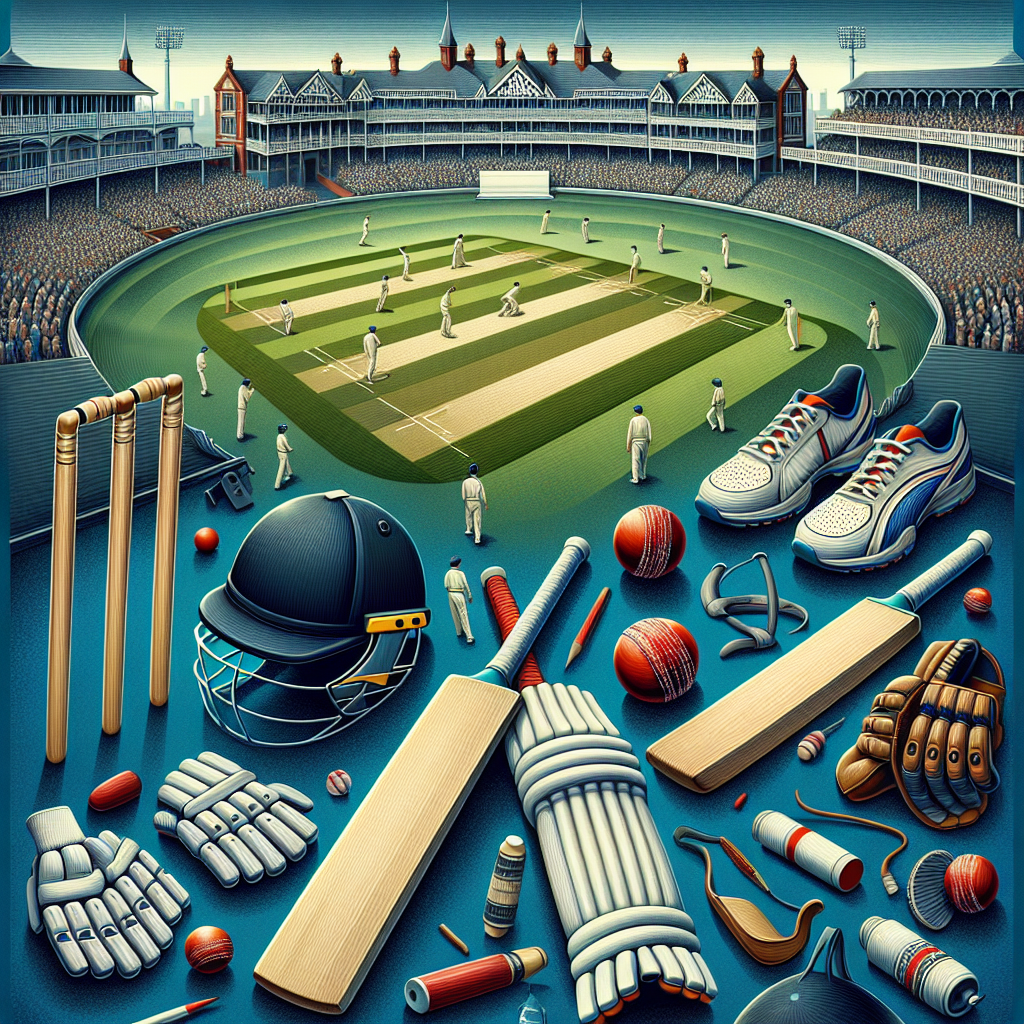
Cricket is played with a bat and ball between two teams of eleven players each. It is played on a circular grass field with a center rectangular pitch where most of the action happens. The primary objective is to score more runs than the opposing team.
Basic Rules and Regulations
- The game is officiated by two on-field umpires and a third umpire whose decisions are final.
- A match can be played in several formats, namely Test, ODI (One Day International), and T20 (Twenty20) cricket.
- Each team takes turns batting and fielding.
- The team with the most runs at the end of the game wins.
Unique Formats of Cricket
Cricket splits into multiple formats, each offering its own style of play, strategic depth, and excitement.
Test Cricket
Test cricket is the first and original form of cricket, playing over five days. It assesses the endurance, technique, and grit of the players. Despite its lengthy nature, it continues to be cherished by purists for its depth and challenge.
One Day Internationals (ODI)
Introduced in the 1970s, ODIs have added elements of speed and aggression to the game, usually completing within a single day, with each side facing a fixed maximum of 50 overs.
Twenty20 (T20) Cricket
The latest international format, T20 cricket, consists of 20 overs per side, making for a high-octane, shorter game time. It appeals to a newer, broader audience due to its entertaining, fast-paced nature.
Key Players and Legends
Cricket has produced numerous legends who have etched their names in the annals of the sport. Players like Sir Don Bradman, Sachin Tendulkar, Brian Lara, and more recently, Virat Kohli have significantly influenced the game’s development.
The Global Impact of Cricket
Cricket has transcended mere borders, impacting cultures and societies globally. It plays a pivotal role in diplomatic relations, especially in the Indian subcontinent, where cricketing events are major social spectacles.
The Role of Tournaments
Events like the Cricket World Cup, ICC T20 World Cup, and the Indian Premier League have transformed cricket into a lucrative sport, driving viewership and commercial sponsorships.
Conclusion
Cricket is much more than a game; it’s a legacy that combines tradition with modernity. Whether through playing, spectating, or discussing, cricket brings together people worldwide under a single passion, crafting stories and moments that remain memorable for life.