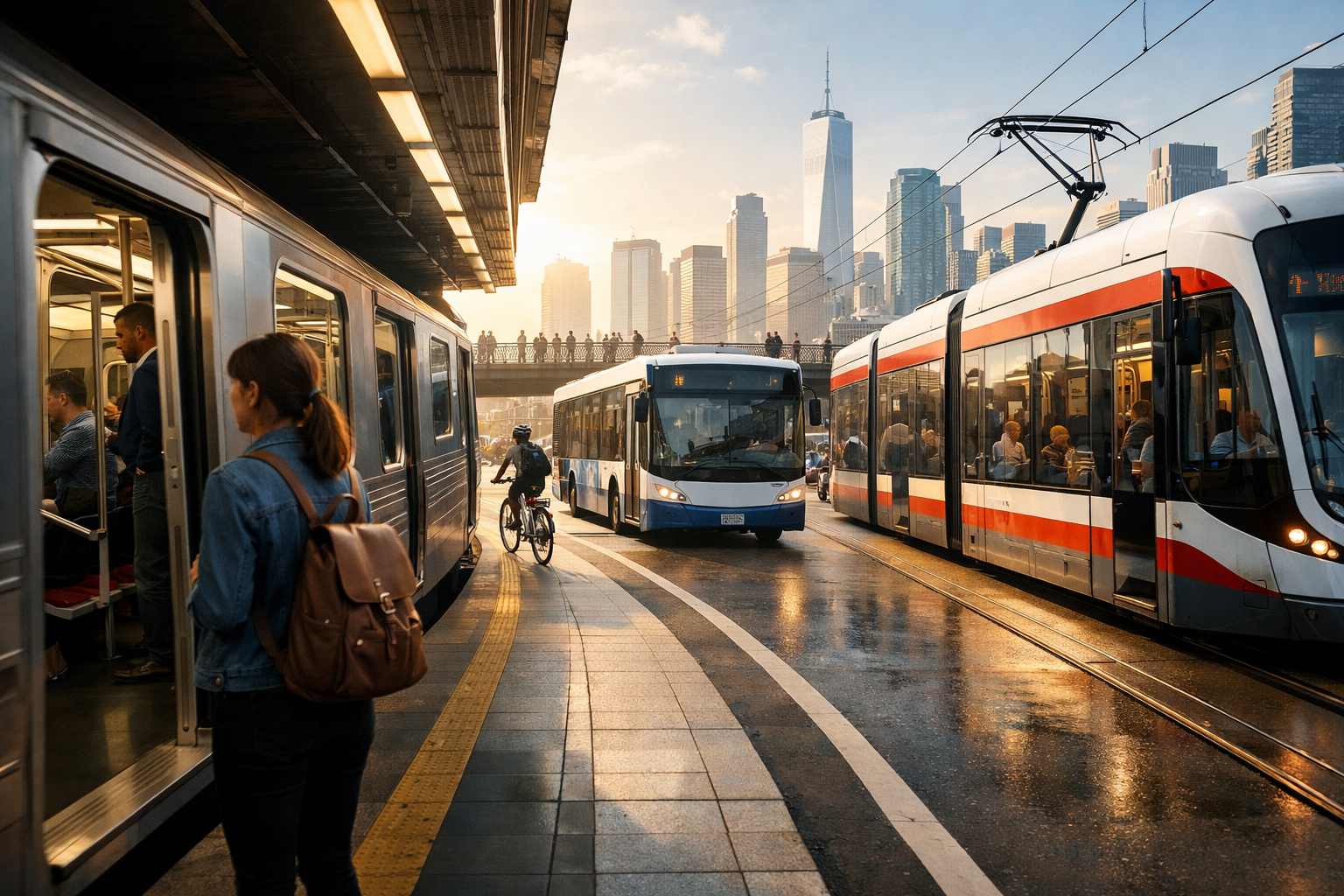
Public Transport’s Role in Automotive & Transport
Public transport sits at the intersection of automotive engineering, city planning, and everyday life. While private cars dominate many road networks, shared mobility systems—buses, rail, trams, ferries, and rapid transit—move people more efficiently through limited urban space. In the broader automotive and transport landscape, public transport influences vehicle design (from electric buses to rail rolling stock), traffic management, energy demand, and even how neighborhoods develop.
At its best, public transport offers a practical alternative to car dependency: it reduces congestion, lowers household transportation costs, and widens access to jobs and services. At its worst—when underfunded or poorly planned—it can become unreliable, uncomfortable, and inequitable. Understanding how it works and what makes it succeed is essential for anyone interested in modern mobility.
Core Modes: Strengths and Trade-Offs
Buses: The Flexible Workhorse
Buses are often the backbone of public transport because they are relatively quick to deploy, scalable, and adaptable to changing demand. Modern fleets increasingly include battery-electric and hybrid models that cut local air pollution and noise. However, buses share road space with other vehicles unless given priority measures, which can make service vulnerable to traffic delays.
- Best for: Broad coverage, feeder routes to rail, and cost-effective expansion.
- Challenges: Congestion sensitivity, stop spacing trade-offs, and fleet maintenance costs.
Rail and Metro: Capacity and Speed
Heavy rail and metros deliver high capacity and consistent travel times by operating on dedicated rights-of-way. They can carry large passenger volumes during peak hours and support denser development around stations. The main limitation is cost: construction, signaling, stations, and electrification demand significant capital investment and long timelines.
- Best for: High-demand corridors, regional commuting, and all-day frequency in dense areas.
- Challenges: High upfront costs, complex construction impacts, and long project delivery cycles.
Trams and Light Rail: Urban Fit
Trams and light rail systems bridge the gap between buses and metros, often running at street level with some dedicated segments. They can improve ride quality and attract riders, but their performance depends heavily on right-of-way design and signal priority. A street-running tram without priority can end up stuck in traffic like any bus.
Ferries and Cable Systems: Niche but Valuable
In coastal cities, river corridors, and hilly terrain, ferries and aerial cable cars can provide strategic links that avoid congested roads. They are rarely citywide solutions, but they can be cost-effective where geography makes traditional infrastructure difficult.
What Makes Public Transport Useful: Frequency, Reliability, and Integration
Riders experience public transport primarily through three factors: how often it comes, whether it arrives when expected, and how easy it is to connect to other services. A route that runs every 10 minutes with predictable travel time feels “turn up and go.” A route that runs every 30–60 minutes, with irregular delays, becomes a last resort.
- Frequency: Higher frequency reduces waiting and makes transfers less painful.
- Reliability: Dedicated lanes, signal priority, and robust schedules prevent cascading delays.
- Network integration: Timed connections, unified maps, and coordinated routes enable smooth multi-leg trips.
- Fare integration: Simple payment across modes (bus-to-rail-to-ferry) avoids “double charging” and confusion.
Technology Transforming Operations
Public transport is becoming more data-driven. Real-time arrival information, automated passenger counting, and predictive maintenance help agencies adjust service and reduce breakdowns. For riders, mobile ticketing and contactless payments speed boarding and reduce friction—especially on buses where dwell time at stops can erode schedule adherence.
On the vehicle side, electrification is a major shift. Battery-electric buses are increasingly common on urban routes with depot charging or opportunity charging at terminals. Rail is already largely electric where infrastructure exists, but improvements in regenerative braking, energy management, and modern signaling can further reduce operating costs and boost capacity.
Environmental and Economic Impacts
Public transport can lower per-passenger emissions by replacing many car trips with fewer, higher-occupancy vehicles—especially when powered by cleaner electricity or low-emission fuels. It also reduces demand for parking and can support walkable station areas, cutting the need for long car journeys. The environmental benefits are strongest when services are frequent and well-used; empty vehicles running infrequently provide less advantage.
Economically, public transport is both an enabler and an employer. It expands access to labor markets and services, helping cities function efficiently. For households, a reliable network can reduce the need for multiple cars, saving on purchase costs, insurance, fuel, and maintenance. For businesses, it improves access to customers and workers, especially in dense corridors.
Equity, Accessibility, and Safety
Public transport is essential infrastructure for people who cannot drive, prefer not to drive, or cannot afford the full costs of car ownership. Equity depends on where routes go, how often they run, and whether fares are affordable relative to incomes. Accessibility also requires physical design: low-floor vehicles, step-free stations, tactile paving, audible announcements, and clear wayfinding.
Safety spans both traffic safety and personal security. Dedicated bus lanes and well-designed crossings reduce collision risks. Lighting, visible staff presence, and well-maintained stations improve the sense of security—particularly during off-peak hours when ridership is lower.
Designing Better Systems: Practical Strategies
Bus Rapid Transit (BRT) Done Right
Bus rapid transit can deliver metro-like performance when it includes dedicated lanes, off-board fare payment, platform-level boarding, and strong intersection priority. Without these, it risks becoming branding rather than transformation.
Priority Over Expansion
Improving the speed and reliability of existing routes—through bus lanes, stop consolidation, and signal priority—often yields faster benefits than expanding coverage with infrequent service. A smaller network with high frequency can outperform a sprawling network with long waits.
First/Last-Mile Connections
Walking, cycling, and micro-mobility links make stations more useful. Secure bike parking, safe sidewalks, and protected crossings can dramatically increase the “catchment area” of a stop without adding new routes.
The Future of Public Transport
The next era of public transport will be shaped by electrification, integrated payment systems, and networks designed around all-day demand rather than peak-only commuting. As cities confront congestion, climate goals, and housing pressures, public transport will increasingly be evaluated not only as a service, but as a foundation for healthier, more productive urban life.
Ultimately, successful public transport feels simple: frequent, dependable, easy to pay for, and safe. Achieving that simplicity is complex—but the payoff is a mobility system that moves more people with less space, less energy, and fewer barriers to opportunity.