The Enduring Appeal of PC Gaming
PC gaming has long held a special place in the wider gaming world. While consoles offer simplicity and mobile gaming brings convenience, the PC continues to stand out for one major reason: freedom. Players can choose their hardware, customize settings, upgrade components over time, and access an enormous range of games across nearly every genre imaginable. This flexibility has helped PC gaming remain relevant through decades of rapid technological change.
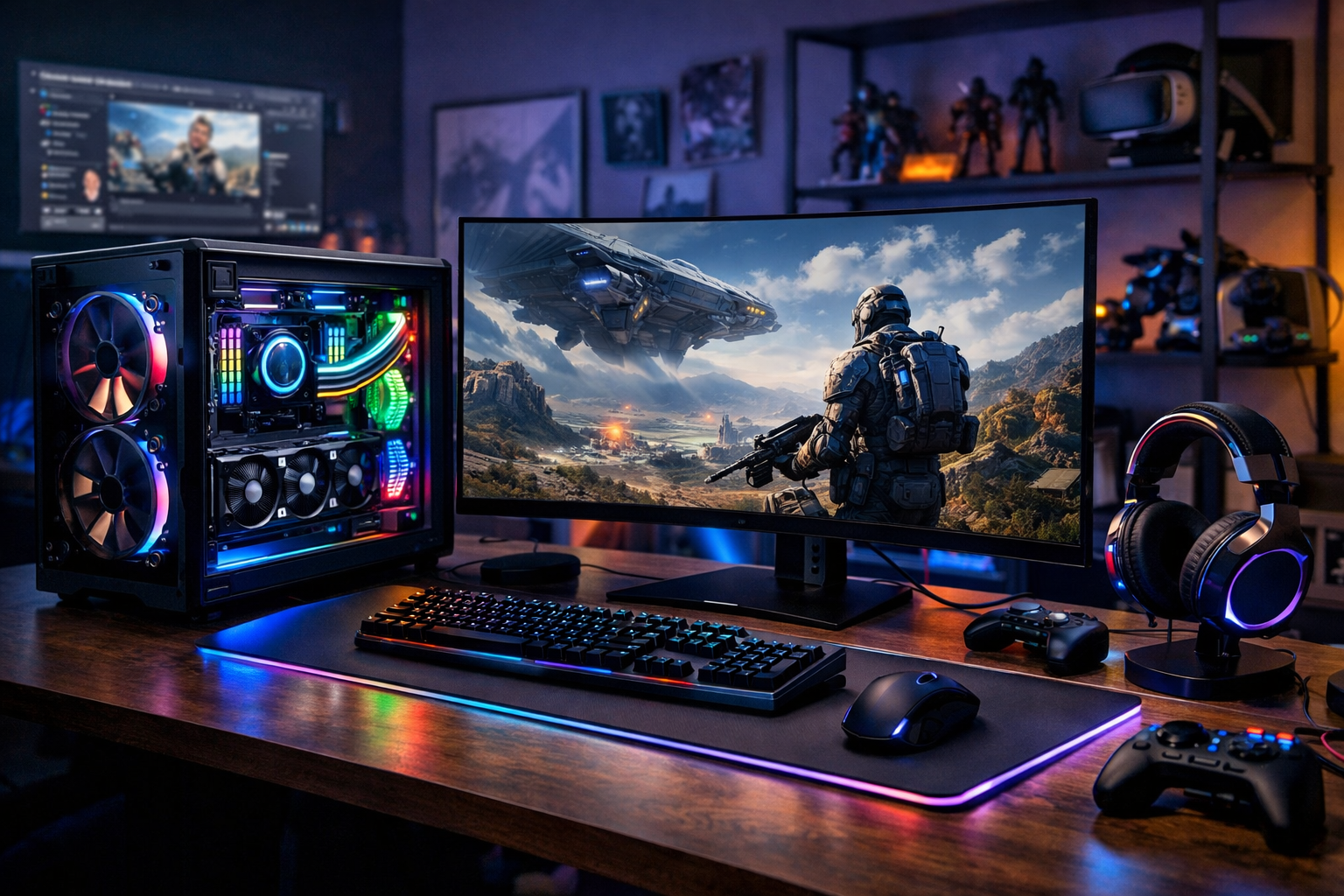
At its core, PC gaming is about control and possibility. A player can build a budget-friendly system for indie titles and esports games, or assemble a high-end machine capable of ray tracing, ultrawide resolutions, and high frame rates. That range allows the platform to serve casual players, creators, modders, competitive gamers, and tech enthusiasts all at once.
Performance and Visual Fidelity
One of the biggest advantages of PC gaming is performance. Unlike fixed hardware platforms, a gaming PC can be tailored to target specific goals such as 1080p competitive play, 1440p ultra settings, or 4K cinematic experiences. Graphics cards, processors, RAM, and storage all contribute to performance, and users can tune these parts to suit their needs and budget.
High refresh rate monitors have also become a major part of the PC gaming experience. For fast-paced shooters, racing games, and multiplayer titles, smoother frame rates can make gameplay feel more responsive and enjoyable. Beyond speed, PCs also offer broad support for advanced graphical options like higher texture quality, improved shadows, better draw distances, and modern lighting technologies.
Another major benefit is scalability. Many games include extensive graphics menus on PC, letting players prioritize either visual quality or frame rate. This means the same game can run on a wide range of systems, from entry-level machines to premium rigs, making the platform remarkably adaptable.
The Strength of the PC Game Library
PC gaming offers one of the largest and most varied libraries in the industry. Big-budget AAA games often launch on PC alongside console releases, while strategy games, simulation titles, sandbox experiences, and indie projects thrive especially well on the platform. Genres like real-time strategy, city builders, management sims, and massively multiplayer online games have particularly deep roots in the PC space.
Digital storefronts have made access easier than ever. Players can buy, download, and update games from multiple platforms, often benefiting from seasonal sales, bundles, subscription services, and early access programs. This has helped lower the barrier to entry for discovering new games while also supporting smaller developers who might not have the resources for traditional retail distribution.
Backward compatibility is another important advantage. Many classic PC games remain playable years after release, either through modern storefronts, community patches, or hardware compatibility tools. For players who care about gaming history, the PC is often the best platform for revisiting influential titles from earlier eras.
Customization, Modding, and User Freedom
Customization is one of the defining features of PC gaming. Players can fine-tune graphical settings, remap controls, use different peripherals, and even alter the game experience itself through mods. In many cases, modding communities extend a game’s lifespan far beyond what developers originally envisioned.
Mods can range from simple interface improvements to complete gameplay overhauls, new storylines, visual upgrades, and quality-of-life fixes. Some of the most popular PC games in history have remained active for years because passionate communities kept creating new content. This level of user involvement is rare on other platforms and helps make PC gaming feel more personal and collaborative.
Peripheral choice also adds to the platform’s flexibility. Keyboard and mouse remain the standard for many genres, especially first-person shooters and strategy games, but players can also use controllers, racing wheels, flight sticks, and specialized audio gear. This wide compatibility makes the PC suitable for many different play styles.
Key Advantages of PC Gaming
- Upgradeable hardware for long-term value
- Broad game library across major and niche genres
- Advanced graphics options and high frame rate potential
- Strong modding communities and custom content
- Support for a wide variety of peripherals
- Frequent digital sales and multiple storefront choices
The Rise of Esports and Online Communities
PC gaming has played a central role in the rise of esports. Many of the world’s most competitive multiplayer games either began on PC or found their strongest audiences there. The platform’s emphasis on precision controls, stable online ecosystems, and high-performance hardware has made it a natural fit for competitive play.
Beyond professional competition, PC gaming also supports vibrant online communities. Voice chat, dedicated servers, streaming tools, Discord groups, and workshop integrations allow players to form teams, share strategies, and build lasting social connections. For many people, PC gaming is not just about playing games but about participating in larger communities centered around creativity, competition, and collaboration.
Streaming and content creation are also deeply connected to the platform. A gaming PC can often double as a production station for recording gameplay, editing video, designing graphics, or broadcasting live content. This crossover between gaming and creation has strengthened the PC’s role in modern digital culture.
Challenges and Considerations
Despite its strengths, PC gaming is not without challenges. Cost can be a major factor, especially for players who want premium components. Building or buying a capable gaming PC often requires more research than purchasing a console, and component prices can fluctuate significantly.
There is also a learning curve. New players may need to understand hardware specifications, driver updates, storage management, and troubleshooting. Although modern systems are more user-friendly than in the past, the platform still demands a bit more technical confidence.
Game optimization can vary as well. Because PC hardware comes in so many configurations, some launches are smoother than others. However, patches, settings adjustments, and community support often help improve the experience over time.
The Future of PC Gaming
The future of PC gaming looks strong. Advances in graphics technology, faster SSDs, AI-assisted performance features, cloud integration, and more efficient components continue to improve what gaming PCs can do. At the same time, developers are creating richer worlds, more advanced simulations, and better cross-platform experiences that keep the PC at the center of gaming innovation.
What makes the platform truly enduring is its ability to evolve. PC gaming is not tied to a single device or a fixed ecosystem. It grows with technology, with player communities, and with the industry itself. Whether someone wants competitive speed, visual excellence, deep customization, or access to a huge range of games, PC gaming remains one of the most rewarding and versatile ways to play.